Parking Mate UK
On-Street Parking PCNs
Code 42 PCN Appeal: Police Vehicle Parking
A space reserved for police vehicles is not ordinary visitor parking for the police station. Check the designation, authorisation and any exception in the parking order.
Start with a free Code 42 PCN assessment. Our £9.99 Automated Penalty Charge Appeal Service includes preparing and submitting your formal representation and tribunal appeal.
Check Your PCN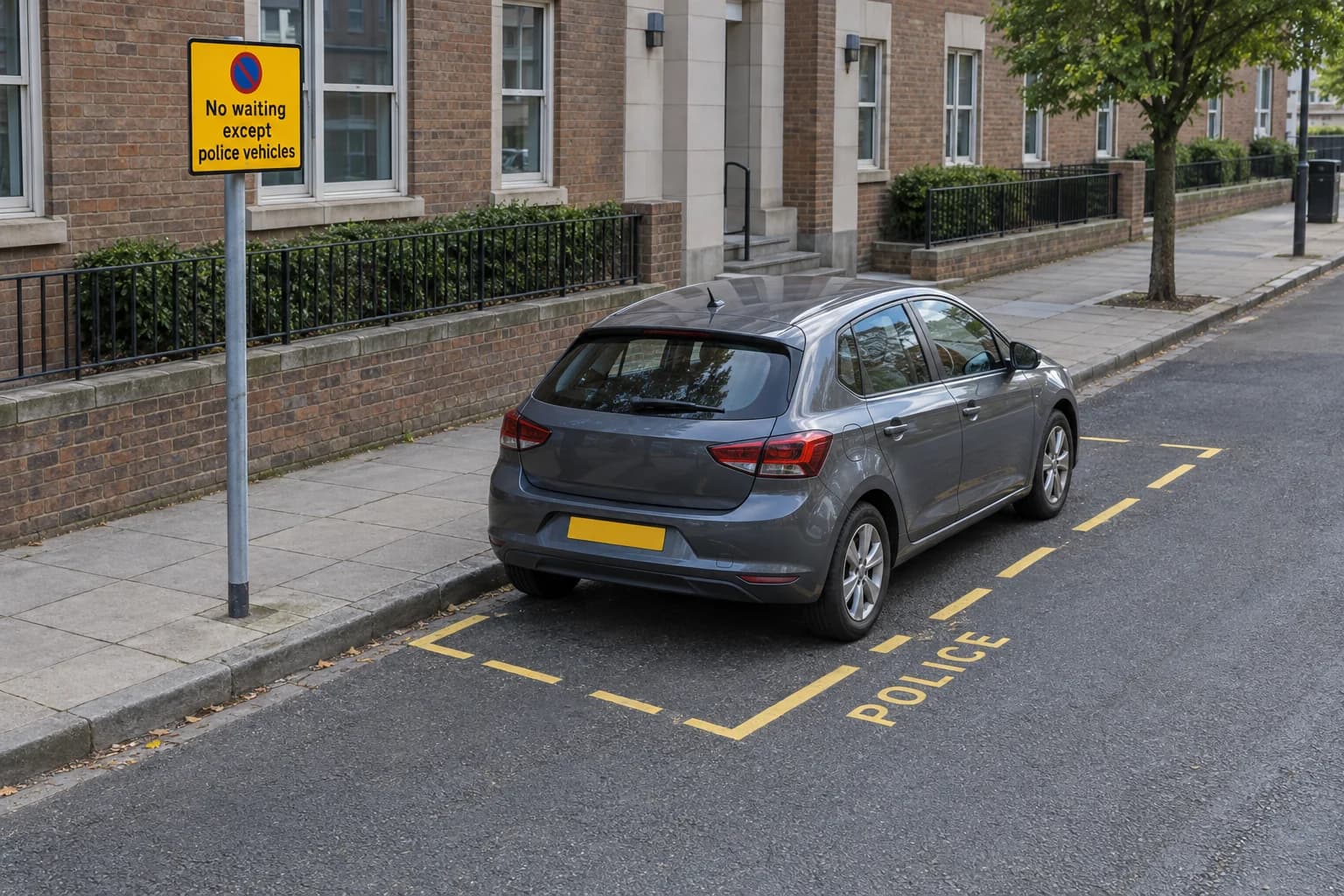
1. What does Code 42 mean?
Code 42 alleges parking in a place reserved for police vehicles. The relevant issue may be whether a vehicle was being used for authorised police purposes, whether it occupied the reserved space, or whether a particular waiting exception applied. A personal vehicle driven by a police employee is not automatically an authorised police vehicle.
- Contravention
- Code 42 alleges parking in a place reserved for police vehicles
- Category
- On-Street Parking PCNs
- Procedure covered
- Civil parking PCNs in England, including London; vehicle PCN or postal PCN, formal representations and independent appeal.
- Formal representation deadline
- 28 days beginning with service of the Notice to Owner or postal PCN.
- Formal decision deadline
- 56 days beginning with receipt of qualifying formal representations, including service of the authority's decision.
- Initial discount
- 50%: 14 days beginning with PCN service, or 21 days for an approved-device postal parking PCN. Any later offer has its own terms.
- Tribunal appeal deadline
- 28 days beginning with service of the Notice of Rejection; the adjudicator can allow more time.
- London borough parking penalties
- Band A: £160 higher level or £110 lower level. Band B: £140 higher level or £90 lower level. The location, contravention and applicable date determine the charge.
- TfL red-route penalties
- TfL currently lists £160, reduced to £80 during the applicable discount period. These are separate from borough parking bands.
- Parking penalties outside London
- England's standard bands are £60 higher/£40 lower or £70 higher/£50 lower. Check the authority's applicable band and any authorised departure. These are not UK-wide rates; other jurisdictions have separate schemes.
2. When Is a Police Bay Reserved?
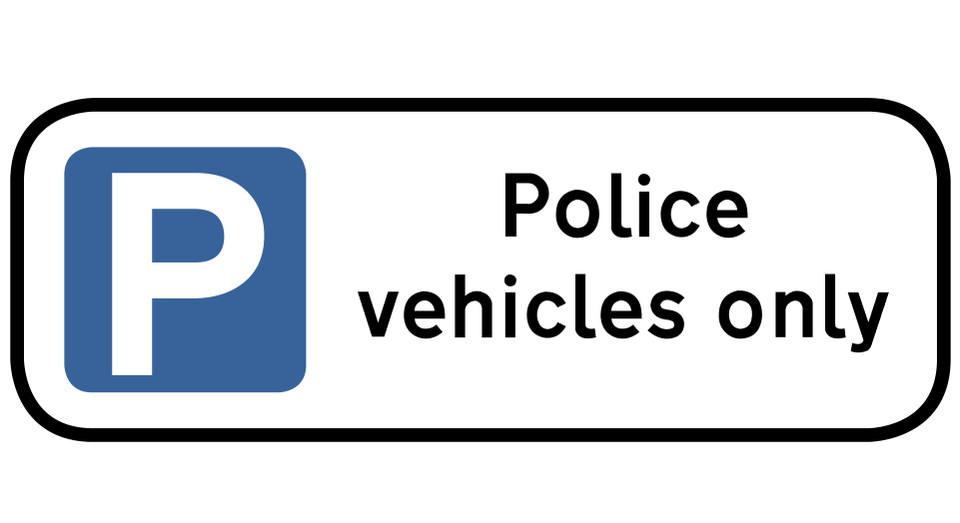
- The parking order must reserve the occupied space for police vehicles during the relevant period, with the reservation adequately indicated.
- The vehicle's use or authorisation must be assessed against that reservation. An unmarked vehicle is not necessarily unauthorised, and an employee's private car is not automatically entitled.
- The evidence must place the vehicle within the reserved bay, rather than merely near a police station or police vehicle.
- Any loading, passenger-assistance or permission exception must come from the applicable restriction and satisfy its conditions. An appointment alone is not parking permission.
3. Signs and restrictions for Code 42
Record the police-vehicle reservation, any operating hours and the bay boundaries. Check which space the sign covers, especially beside ordinary visitor parking.
This is a reserved-parking allegation. Do not treat its exceptions as identical to the no-stopping conditions of a diplomatic bay or taxi rank.
4. Grounds to challenge a Code 42 PCN
The statutory ground must match what happened. These code-specific points explain how to establish it.
- The vehicle was authorised for the reserved police use, including an unmarked vehicle where appropriate. Provide confirmation connecting its use and registration to the relevant time.
- The vehicle stood outside the reserved bay or outside the reservation's operating hours. Show the complete sign, boundary and position.
- A loading or passenger-assistance exception in the applicable parking order covered the activity. Explain its necessity and duration rather than assuming every delivery to a police station is exempt.
- The sign or bay layout did not adequately identify the reservation, or a specific direction or permission authorised the position. Identify the ambiguity or produce the dated approval.
5. Statutory parking appeal grounds
- The alleged parking contravention did not happen, including where a relevant exemption applied or the restriction was not adequately signed.
- You were not the owner at the relevant time: you never owned the vehicle, sold it before the event or acquired it afterwards.
- The vehicle was under someone else's control without the owner's consent at the time of the alleged contravention.
- You are a vehicle-hire firm and the vehicle was hired under a qualifying agreement with a signed statement accepting PCN liability. Supply the hirer's name and address.
- The authority is demanding more than the penalty legally applicable to this case.
- The authority failed to comply with a statutory requirement in imposing or recovering the penalty: a procedural impropriety.
- The traffic order relied on is invalid, except an order subject to Part 6 of Schedule 9 to the Road Traffic Regulation Act 1984.
- For a postal PCN relying on prevented service or a qualifying drive-away under regulation 10(2)(b) or (c), nobody prevented the officer from attaching or handing over the PCN. This is not the ground for an approved-device postal PCN.
- The enforcement notice should not have been served because the penalty was already paid in full, or at the valid discounted amount by the applicable deadline. Paying a parking tariff is different from paying the penalty.
6. Applicable exemptions
Check the parking order's exceptions for this reserved place. Permission to enter a police station or attend an appointment does not necessarily include parking. A Blue Badge and ordinary parking payment do not automatically override the police-vehicle reservation.
[1][2][3]7. Evidence for your Code 42 appeal
- The police-bay sign and wide photographs of the vehicle position.
- Official confirmation of authorised police-vehicle use where relevant.
- Delivery records or a timed passenger-assistance account tied to the applicable exception.
- Written directions or permission and the council's observation notes.
8. How to challenge your Code 42 PCN
These stages cover civil parking PCNs in England, including London, for on-street parking and council car parks. Private Parking Charge Notices, clamping or removal, and notices under other UK or specialist local schemes have separate procedures.
A PCN attached to the vehicle or handed to the driver can be challenged informally before a Notice to Owner is served. If a Notice to Owner arrives, its recipient must make formal representations against that notice even if an earlier challenge is still unanswered. Liability normally rests with the owner, not simply whoever was driving.
A postal parking PCN under the English 2022 scheme is itself the formal notice: make representations against it without a separate Notice to Owner. Formal representations against either notice must reach the authority within 28 calendar days beginning with the date of service. Count the service date as day one, not the date of the parking event. If submitting late, explain the delay; the authority may disregard late representations.
The initial 50% discount runs for 14 days beginning with service for a vehicle PCN or a postal PCN based on prevented service or a qualifying drive-away. An approved-device postal parking PCN has 21 days beginning with service. The discount deadline is separate from the formal representation deadline.
An early challenge may lead to a renewed discount if rejected, depending on the authority's policy and written reply. DfT recommends considering a further 14-day offer after rejecting a challenge received during the discount period; this is not an automatic entitlement. Check any new amount and expiry date in the reply.
Explain why the vehicle was authorised, why the reservation did not apply, or which specific activity exception was satisfied. Keep any request for discretion over a station visit separate from those grounds.
- Identify the current notice and use its challenge or formal-representation instructions. Submit through the issuing authority's stated service or postal address.
- Give the PCN reference, vehicle registration, location and date. Select the relevant ground and explain the facts supporting it; identify any request for discretionary cancellation separately.
- Attach clear copies of relevant photographs, payment or permit records, delivery evidence and correspondence. Link each document to the point it supports and retain the originals.
- For ownership, hire or use without consent, include the relevant records. Provide known buyer or seller details for an ownership change, or hirer details and the qualifying hire documents where applicable.
- Keep the submitted text, every attachment and the dated acknowledgement. For post, retain proof of posting and any delivery evidence; the formal deadline concerns the authority's receipt.
9. When the authority must respond
For formal representations under England's 2022 parking rules, the authority must consider your representations and supporting evidence and serve its decision within 56 days beginning with the date it receives them. This covers representations made in the required form and manner that are in time, or late representations the authority has not disregarded. Receipt is day one; the deadline concerns service of the decision, not simply writing or posting it.
If the authority fails to comply within that period, the representations are deemed accepted. It must cancel the relevant Notice to Owner or postal PCN, refund any sum paid in relation to it and send confirmation of cancellation. Keep the submission acknowledgement, notice and delivery records to establish the dates.
The statutory 56-day rule does not apply to an informal challenge against a vehicle PCN or to a request for photographs. An unanswered informal challenge does not remove the requirement to respond formally if a Notice to Owner is served.
[7][6][10][11]10. If your parking challenge is rejected
An informal rejection is not a tribunal decision. You can pay on the terms offered, or make formal representations if a Notice to Owner is served. Address the reasons given and include the evidence again at the formal stage.
A formal Notice of Rejection gives 28 days beginning with its service to pay or appeal to the independent adjudicator. It must explain the appeal route. If your appeal is late, include the reasons for the delay; the adjudicator decides whether to allow more time.
A later Charge Certificate can increase the penalty by 50%, followed by debt registration and an Order for Recovery if unpaid. Those documents have distinct procedural remedies, not a fresh ordinary appeal against the parking event.
[7][8][9][11]11. Appeal to the independent tribunal
Use the tribunal identified in the Notice of Rejection. London civil parking appeals go to London Tribunals; relevant appeals elsewhere in England and Wales go to the Traffic Penalty Tribunal. Welsh notices follow their own regulations. There is no fee to lodge a parking tribunal appeal.
The statutory grounds above are the basis for the adjudicator's decision. You can also explain compelling circumstances, but mitigation alone is not a statutory ground: the adjudicator may recommend that the authority reconsider cancellation rather than allow the appeal on that basis.
If the appeal is allowed, the penalty is cancelled. If refused, the full penalty is normally payable under the decision's instructions; an earlier discount does not automatically continue through the tribunal stage.
- Register the appeal using the rejection's reference or verification details and select the ground that applies. Save the registration confirmation.
- Provide the PCN, formal representations, rejection and relevant supporting evidence. Explain which findings or reasons you dispute.
- Read the authority's evidence and respond to any factual errors or missing points. Add further documents within the tribunal's stated evidence timetable.
- Choose from the available hearing or written-decision options and follow the tribunal's directions. Keep the final decision with your case records.
Parking tribunal decisions and what they show
These shared parking cases illustrate evidence or procedural issues relevant to a Code 42 challenge. Where a case concerns another parking code, its wider evidential point is distinguished from the conditions of your restriction.
An order and maps did not prove the alleged parking event
Case 2250022866 / 2025-05-01 / Adjudicator Belinda Pearce
Belinda Pearce allowed the appeal because the authority had not supplied evidence substantiating the alleged contravention. The parking order and plans did not establish what the vehicle was doing at the relevant time.
Read the case commentary“In the absence of evidence to substantiate the assertion I can find no contravention proved.”
Belinda Pearce, case 2250022866
London parking sample context (not code-specific)
4,151 of 13,391 recorded cases were allowed (31.0%).
| Recorded outcome | Cases |
|---|---|
| Allowed | 4,151 |
| Refused | 9,240 |
| Total | 13,391 |
Sources and references
- PATROL: Contravention codes and suffixes
Contravention codes and suffixes
- Department for Transport: On-street parking control signs and road markings
On-street parking control signs and road markings
- Department for Transport: Statutory guidance on civil parking enforcement in England
Statutory guidance on civil parking enforcement in England
- Traffic Management Act 2004: representations and appeals
Section 80: powers to prescribe representation grounds, time limits, authority duties and independent appeals. Detailed English parking requirements are in SI 2022/576.
- London Tribunals: grounds of appeal for parking
Nine parking grounds. Read with SI 2022/576 regulation 5 for the hire, traffic-order, postal-service and already-paid conditions.
- England's 2022 parking representation requirements
Regulation 5(2), (4)-(8): grounds, compelling reasons, ownership and hire particulars. Regulation 4 limits the postal-PCN route to an unpaid penalty; regulation 3 distinguishes informal challenges and formal notices.
- England's statutory deadline for deciding formal representations
Regulation 6(2)-(7): late representations, consideration of evidence, decision service within 56 days of receipt, rejection requirements and deemed acceptance.
- England's independent parking appeal requirements
Regulation 7(1)-(8): 28 days beginning with rejection service, adjudicator's power to allow more time, appeal outcomes and recommendations on compelling reasons.
- England's 2022 parking notice and service rules
Regulation 2 defines the applicable discount date; regulations 9-11 govern vehicle and postal PCNs; regulation 20 covers the Notice to Owner; regulations 21-23 cover later recovery. Schedule 2 specifies notice contents.
- DfT: statutory guidance on civil parking enforcement in England
Collecting penalty charges; informal challenges; formal representations; notification of outcomes; adjudication. Distinguishes statutory duties, discount re-offer guidance and discretion.
- London Tribunals: parking PCN enforcement process
Parking without clamping or removal: vehicle PCN, Notice to Owner, postal PCN, formal decision and tribunal stages.
- London Tribunals: preparing an appeal
Appeal eligibility, no filing charge, copies of supporting evidence, authority evidence and hearing preparation. Follow the individual tribunal's directions for evidence deadlines.
- Traffic Penalty Tribunal: parking PCN and appeal process
Independent parking appeals for relevant authorities in England outside London and Wales. Welsh notices have their own regulations.
- London Councils: parking penalty bands
Parking PCNs: Band A higher/lower GBP160/GBP110; Band B GBP140/GBP90. Location and contravention determine the band and level; these are not TfL or national rates.
- TfL: red-route penalty charge amounts
Current red-route PCN GBP160, reduced to GBP80 within the applicable 14- or 21-day period. Used for the charge distinction only, not a submission route.
- England outside London: statutory charging guidelines
Part 1 paragraph 1 and Table 1: Band 1 higher/lower GBP60/GBP40; Band 2 GBP70/GBP50, with half-rate early payment. Paragraph 5 preserves authorised departures from the guidelines.
About Parking Mate UK
For Code 42, we focus on police vehicle bays: the restriction at the location, the evidence recorded and the ground that answers the allegation. We use relevant London Tribunals decisions to help identify what makes that evidence persuasive.
The 2025 London Tribunals sample described above contains 13,391 decisions: 4,151 allowed and 9,240 refused. Its stated category scope applies to these figures.
Send us your Code 42 PCN for a free assessment. Parking Mate UK prepares and submits your challenge and handles your tribunal appeal, with support online and on WhatsApp.
Check Your PCN