Parking Mate UK
London Borough of Barnet / Code 62
Barnet Code 62 PCN Appeal
Received a Code 62 PCN from Barnet? For a London pavement-parking PCN, check the wheel position, the extent of any authorised footway parking and the specific statutory exceptions. No obstruction is not, by itself, a defence.
Start with a free Code 62 PCN assessment. Our £9.99 Automated Penalty Charge Appeal Service includes preparing and submitting your formal representation and tribunal appeal.
Check Your PCN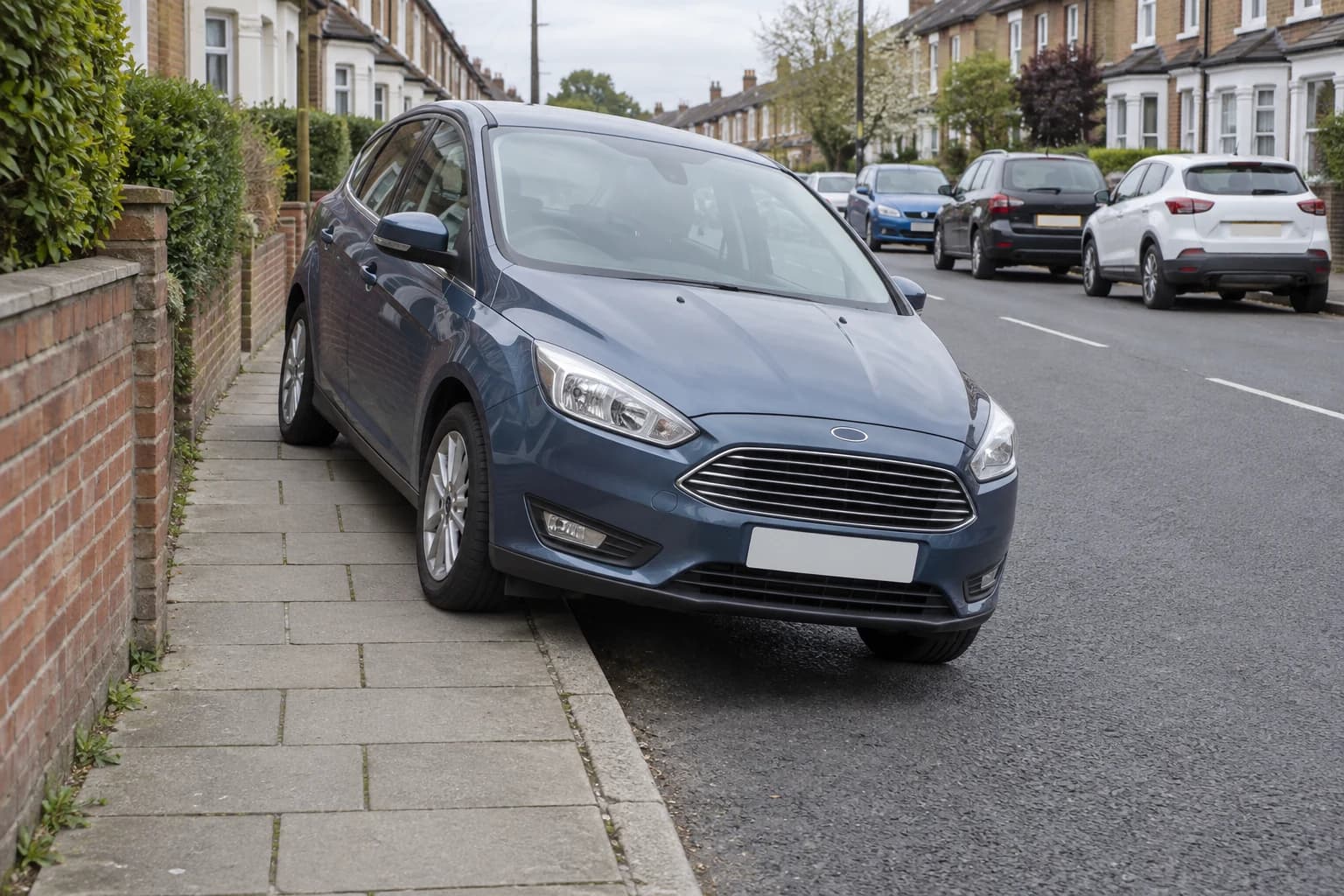
1. What does Barnet Code 62 mean?
Code 62 alleges parking with one or more wheels on or over a footpath or a part of a road other than the carriageway. In Greater London, section 15 of the Greater London Council (General Powers) Act 1974 creates the general prohibition, subject to exceptions and authorised areas. It does not depend on yellow lines or proof that a pedestrian was actually blocked. Heavy commercial vehicles have a separate section 19 test, explained under code 61.
- Contravention
- Code 62 alleges parking with one or more wheels on or over a footpath or a part of a road other than the carriageway
- Category
- On-Street Parking PCNs
- Issuing authority
- London Borough of Barnet
- Formal representation deadline
- 28 days beginning with service of the Notice to Owner or postal parking PCN.
- Penalty and discount
- Use the charge and discount printed on your PCN; the applicable amount depends on the notice and contravention date.
- Initial discount
- The initial 50% discount applies for 14 days beginning with PCN service, or 21 days for an approved-device postal parking PCN. An early challenge may lead to a renewed discount if rejected; check the council's policy and the amount and deadline in its reply.
- Appeal route
- Barnet, then London Tribunals after a formal Notice of Rejection.
2. What must Barnet establish?
London's general footway-parking prohibition does not need a separate ban sign on every street. Where parking is authorised, check the signs showing partial or full footway parking and where that permission ends.
Compare any marked bays and arrows with the authorising resolution. The newer English pavement-parking powers must not be treated as proof that the same London prohibition applies to every street elsewhere.
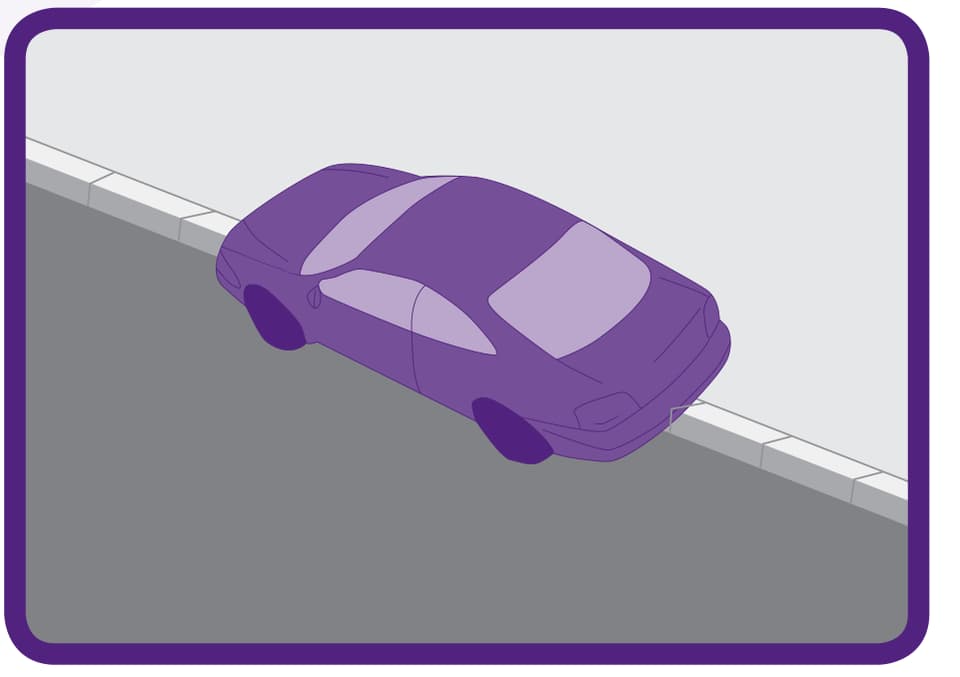
- The London allegation must fall within section 15 of the Greater London Council (General Powers) Act 1974. Outside London, the authority must identify the separate power operating at that place and date.
- The evidence must show one or more wheels on or over the relevant non-carriageway road area or footpath. A paving colour change alone does not establish the legal boundary.
- Any resolution authorising footway parking must be checked against its extent, the signs and the parked position. Permission on one section does not automatically extend along the street.
- The London loading exception requires necessity, continuous attendance and no more than 20 minutes unless the council permits longer. The heavy-commercial-vehicle test under Code 61 is separate.
- Other claimed exceptions must meet their own statutory conditions. Lack of obstruction, a Blue Badge or common parking practice does not alone establish permission.
3. Grounds and exemptions for a Barnet Code 62 appeal
The statutory ground must match what happened. These code-specific points explain how to establish it.
A Blue Badge, residents' permit or desire to leave room for passing cars does not generally authorise pavement parking. Parliament's 2026 Act provides for further English local-transport-authority powers through regulations and local prohibitions; it should not be read as an automatic copy of London's ban on every street. Essex and Exeter also have their own provisions, covered separately below.
- The wheel position is wrong: compare the council's photographs with the actual carriageway edge and surface layout. Paving colour or an indistinct kerb alone does not settle the legal boundary.
- Footway parking was authorised: obtain the council resolution or authorisation and compare its extent with the signs, bays and vehicle position. Permission on one part of a street does not automatically cover the next section.
- The London loading exception applied: the loading could not satisfactorily have been performed without parking there, the vehicle was never left unattended, and the period did not exceed 20 minutes unless the council permitted longer. Address all three conditions.
- A different statutory exception applied: identify uniformed-police permission, a genuine emergency, necessary attended breakdown assistance or an eligible public-service or authorised works vehicle. A tradesperson visiting a house is not automatically exempt.
- The PCN relies on the wrong territorial power: outside London, require the authority to identify the applicable prohibition and its operation on the date. The London Act is not a UK-wide pavement-parking ban.
- The alleged parking contravention did not happen, including where a relevant exemption applied or the restriction was not adequately signed.
- You were not the owner at the relevant time: you never owned the vehicle, sold it before the event or acquired it afterwards.
- The vehicle was under someone else's control without the owner's consent at the time of the alleged contravention.
- You are a vehicle-hire firm and the vehicle was hired under a qualifying agreement with a signed statement accepting PCN liability. Supply the hirer's name and address.
- The authority is demanding more than the penalty legally applicable to this case.
- The authority failed to comply with a statutory requirement in imposing or recovering the penalty: a procedural impropriety.
- The traffic order relied on is invalid, except an order subject to Part 6 of Schedule 9 to the Road Traffic Regulation Act 1984.
- For a postal PCN relying on prevented service or a qualifying drive-away under regulation 10(2)(b) or (c), nobody prevented the officer from attaching or handing over the PCN. This is not the ground for an approved-device postal PCN.
- The enforcement notice should not have been served because the penalty was already paid in full, or at the valid discounted amount by the applicable deadline. Paying a parking tariff is different from paying the penalty.
4. How to make a formal representation to Barnet
For a parking PCN attached to the vehicle or handed to the driver, send an informal challenge to Barnet. Formal representations are made against the Notice to Owner, or directly against a postal parking PCN, within 28 days beginning with service. Respond to the formal notice even if an earlier informal challenge is unanswered.
The initial 50% discount applies for 14 days beginning with PCN service, or 21 days for an approved-device postal parking PCN. An early challenge may lead to a renewed discount if rejected; check the council's policy and the amount and deadline in its reply.
- The complete PCN and photographs showing every wheel relevant to the allegation, not just a cropped view of the vehicle body.
- The footway-parking start and end signs, marked bays and a street plan showing the authorised area.
- The council's resolution or written vehicle-specific permission where an authorised section or dispensation is disputed.
- Loading or assistance records identifying the duration, necessity and person attending the vehicle throughout.
- Evidence of an emergency or the statutory activity relied upon, and the precise legislation named on an outside-London notice.
- Follow Barnet's official challenge instructions using the link below.
- Use the Challenge a PCN link on Barnet's instructions page, or write to Barnet Parking Services. Include your PCN number, vehicle registration, full address and supporting photographs or other evidence.
- Barnet's evidence viewer requires the PCN number, vehicle registration and web code. Its guidance asks you to allow 24 hours for images to appear and limits footage access to the named person or an authorised representative.
- Formal representations require the unique web code on the notice. For relevant notices dated before 1 November 2025 without a code, Barnet directs motorists to call 0333 200 7380. Do not pay a PCN you intend to contest: payment closes the case.
- Explain which part of the Code 62 allegation you dispute. Include the PCN reference, vehicle registration, your address and copies of photographs or records supporting each point.
- Postal alternative: Barnet Parking Services, PO Box 5772, DINGWALL, IV15 0BD. Allow time for receipt before the deadline and retain proof of posting.
- Save the full submission, attachments and dated acknowledgement.
5. How long does Barnet have to respond?
Barnet must serve its decision within 56 days beginning with receipt of qualifying formal representations. If it fails to comply, those representations are deemed accepted. This statutory period applies to formal representations, not an informal challenge or a request for photographs.
[8]6. If Barnet rejects your representation
A formal Notice of Rejection explains Barnet's decision and how to appeal to London Tribunals. You have 28 days beginning with service of that notice to pay or register your tribunal appeal.
Compare the reply with the Code 62 grounds and evidence you submitted. Identify any unanswered point, missing evidence or inconsistency between the restriction and the recorded event. Keep the rejection notice and the appeal details supplied with it.
An informal rejection is different: formal representations can be made if a Notice to Owner follows.
[8][9]7. Taking your Barnet appeal to London Tribunals
London Tribunals is independent of Barnet. Use the registration instructions and verification details in the Notice of Rejection, upload your evidence and explain why the alleged Code 62 contravention or liability is disputed.
There is no fee to register the appeal. If it is refused, the full penalty is normally payable; an earlier discount does not automatically continue. If registering late, explain the delay so the adjudicator can decide whether to accept the appeal.
Read Barnet's evidence pack and respond to the points relevant to your case. Keep to the tribunal's directions and evidence deadlines.
[8][13]Tribunal examples relevant to Code 62
These London Tribunals decisions illustrate issues relevant to Code 62. They involve the authorities named below, not necessarily Barnet. Use the reasoning that matches your evidence; these are not Barnet-specific outcomes.
The authority did not resolve markings suggesting permitted footway parking
Case 2250333185 / 2025-10-10 / Adjudicator Martin Hoare
Martin Hoare allowed the appeal where the photographs showed a textured strip and faint bay line. The authority's account did not adequately distinguish that position from nearby permitted footway parking.
Read the case commentary“The appeal is allowed.”
Martin Hoare, case 2250333185
An order and maps did not prove the alleged parking event
Case 2250022866 / 2025-05-01 / Adjudicator Belinda Pearce
Belinda Pearce allowed the appeal because the authority had not supplied evidence substantiating the alleged contravention. The parking order and plans did not establish what the vehicle was doing at the relevant time.
Read the case commentary“In the absence of evidence to substantiate the assertion I can find no contravention proved.”
Belinda Pearce, case 2250022866
2025 London Tribunals results: shared context
319 of 1,141 recorded cases were allowed (28.0%).
| Recorded outcome | Cases |
|---|---|
| Allowed | 319 |
| Refused | 822 |
| Total | 1,141 |
Full Code 62 PCN Appeal Guide
Read the detailed legislation, signage requirements, exemptions and case analysis for this contravention.
Read the full Code 62 PCN Appeal GuideSources and references
- PATROL: Contravention codes and suffixes
Contravention codes and suffixes
- UK legislation: Greater London Council (General Powers) Act 1974, section 15
Greater London Council (General Powers) Act 1974, section 15
- Department for Transport: On-street parking control signs and road markings
On-street parking control signs and road markings
- UK legislation: English Devolution and Community Empowerment Act 2026, Schedule 32: further pavement-parking powers
English Devolution and Community Empowerment Act 2026, Schedule 32: further pavement-parking powers
- Department for Transport: Statutory guidance on civil parking enforcement in England
Statutory guidance on civil parking enforcement in England
- London Tribunals: grounds of appeal for parking
Nine parking grounds. Read with SI 2022/576 regulation 5 for the hire, traffic-order, postal-service and already-paid conditions.
- England's 2022 parking representation requirements
Regulation 5(2), (4)-(8): grounds, compelling reasons, ownership and hire particulars. Regulation 4 limits the postal-PCN route to an unpaid penalty; regulation 3 distinguishes informal challenges and formal notices.
- England's statutory deadline for deciding formal representations
Regulation 6(2)-(7): late representations, consideration of evidence, decision service within 56 days of receipt, rejection requirements and deemed acceptance.
- England's independent parking appeal requirements
Regulation 7(1)-(8): 28 days beginning with rejection service, adjudicator's power to allow more time, appeal outcomes and recommendations on compelling reasons.
- England's 2022 parking notice and service rules
Regulation 2 defines the applicable discount date; regulations 9-11 govern vehicle and postal PCNs; regulation 20 covers the Notice to Owner; regulations 21-23 cover later recovery. Schedule 2 specifies notice contents.
- DfT: statutory guidance on civil parking enforcement in England
Collecting penalty charges; informal challenges; formal representations; notification of outcomes; adjudication. Distinguishes statutory duties, discount re-offer guidance and discretion.
- English Devolution and Community Empowerment Act 2026: pavement-parking powers explained
Chapter 4, section 68, paragraphs 424-430: existing powers and regulations enabling local prohibitions
- London Tribunals: preparing your appeal
Registering an appeal, verification details and supporting evidence.
- Barnet: Challenge a Penalty Charge Notice (PCN)
View the evidence; Challenge a PCN; Legal information > Formal Representations. Official page text available in the search index; direct page retrieval was access-blocked during review.
About Parking Mate UK
For Code 62, we focus on london footway parking: the restriction at the location, the evidence recorded and the ground that answers the allegation. We use relevant London Tribunals decisions to help identify what makes that evidence persuasive.
The 2025 London-wide analysis above covers 1,141 decisions: 319 allowed and 822 refused. Its stated category scope applies; these are not Barnet-only figures.
Send us your Barnet Code 62 PCN for a free assessment. Parking Mate UK prepares and submits your formal representation to Barnet and handles your London Tribunals appeal, with support online and on WhatsApp.
Check Your PCN