Parking Mate UK
London Borough of Bromley / Code 29
Bromley Code 29 PCN Appeal
Received a Code 29 PCN from Bromley? Received a Code 29 PCN for travelling against a one-way restriction? Where you joined the road, which way the signs faced and the direction shown on CCTV can decide the dispute. Parking Mate UK checks your route against the one-way order and signs, then prepares and submits your formal representation.
Start with a free Code 29 assessment. Our £9.99 Automated Penalty Charge Appeal Service includes preparing and submitting your formal representation and tribunal appeal.
Check Your PCN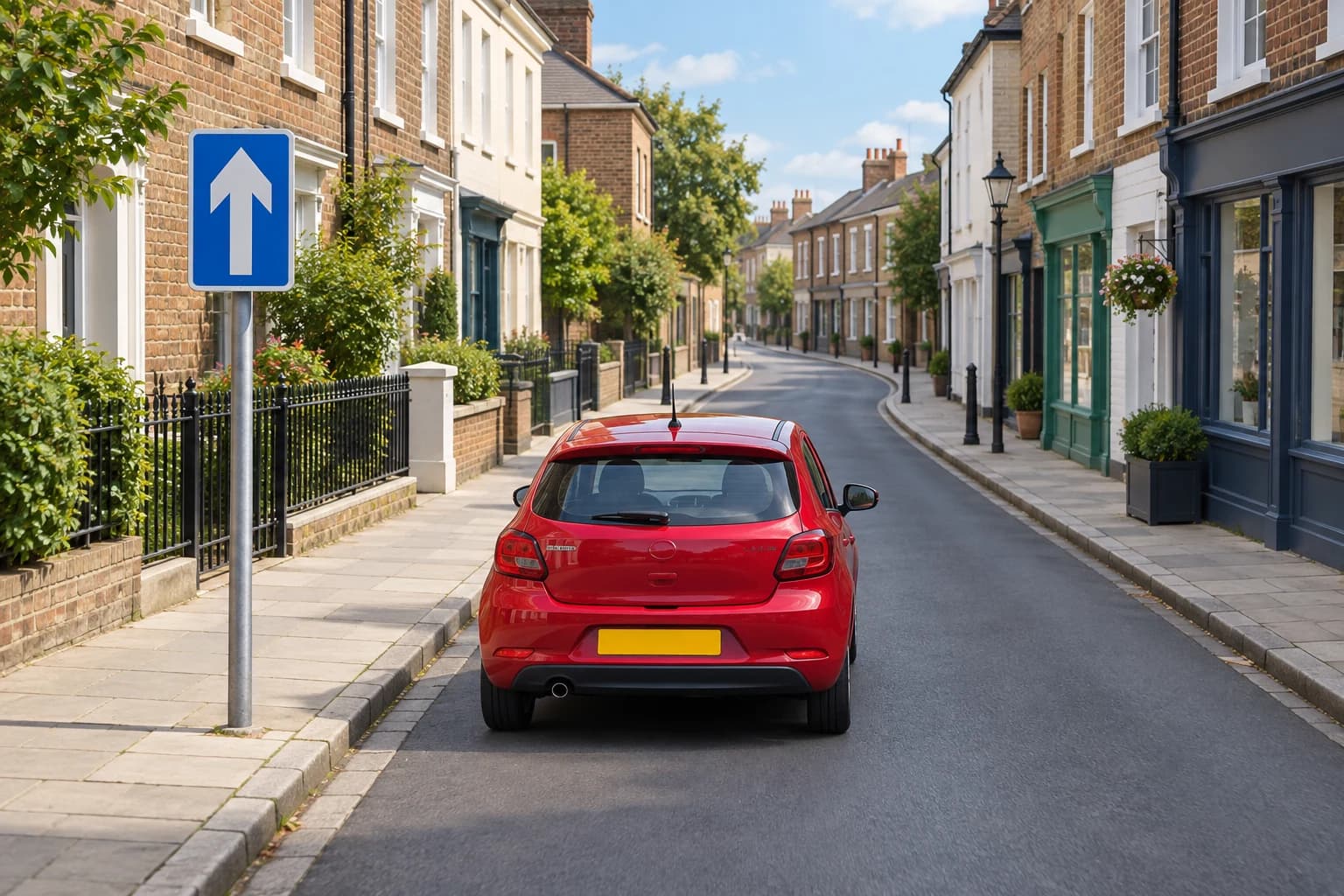
1. What does Bromley Code 29 mean?
Code 29 alleges that your vehicle did not follow the direction required by a one-way restriction. The authority must connect the recorded movement to the part of road covered by that restriction. A still image of a parked vehicle does not show the movement that led to that position.
You may have entered from a side street or car park rather than the main entrance, or changed direction after stopping. Those details matter when identifying which signs informed your journey. Code 29 is not simply another name for passing a no-entry sign: read the PCN's full allegation and match it to the movement and signs relied upon.
- Contravention
- Code 29: failing to comply with a one-way restriction
- Issuing authority
- London Borough of Bromley
- Formal representation deadline
- 28 days beginning with service of the PCN.
- Penalty and discount
- Use the charge and discount printed on your PCN; the applicable amount depends on the notice and contravention date.
- Initial discount
- The initial 50% discount applies during the first 14 days beginning with the date of the PCN. A challenge does not automatically extend that period. Check the council's policy and any renewed offer in its reply.
- Appeal route
- Bromley, then London Tribunals after a formal Notice of Rejection.
2. What must Bromley establish?
Start with a route plan that joins the evidence together: where the vehicle entered, which signs it encountered, and where it travelled against the alleged direction.
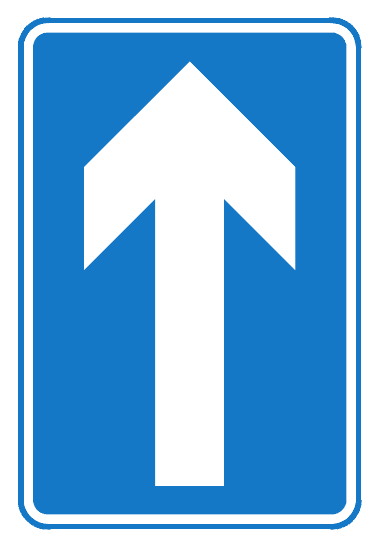
Diagram 652 is a rectangular blue sign with a white upward arrow. It indicates an order requiring traffic to travel in one direction along the road. Its position and angle should make clear which road it applies to.
A circular blue arrow is different: diagram 606 requires the indicated direction, while diagram 610 tells traffic which side of the sign to pass. A circular instruction at a junction may help direct traffic into a one-way system, but it is not the rectangular one-way sign. The separate ONE WAY sign aimed at pedestrians is not a substitute for the required driver-facing signs.
A no-entry sign at the opposite end controls entry from that direction. It does not show what a driver joining halfway along the road could see. Check entry signs and repeaters along the actual route; a painted arrow can help, but does not replace the need to establish the order and adequate signing.
- One-way order: identify the operative article and road schedule or map, including the required direction, extent, commencement and any exceptions. The road name alone is not the complete restriction.
- Actual entry point: match the recording to the relevant side-road junction, access or car-park exit. The authority's sign photographs should be traceable to that route.
- Sign orientation: show the front of the sign from the driver's approach. A sign angled towards a different road, or visible only from another approach, may not adequately explain this one-way restriction.
- Signs along the road: consider the entry signs, bends, intervening junctions and repeaters together. Traffic Signs Manual advice on repeater spacing is guidance, not a universal distance-based cancellation rule.
- Lighting: diagram 652 has a specific test involving a speed limit above 20 mph, a street-lighting lamp within 50 metres and a junction within 50 metres from which traffic can approach the sign. Establish those conditions before alleging a direct-lighting defect.
- Recorded movement and identity: watch the full sequence, including any turn, stop or reversal. Check that the vehicle is yours and that its movement, not just its position in a still image, proves the allegation.
3. Grounds and exemptions for a Bromley Code 29 appeal
A useful representation identifies a specific gap between the allegation and the evidence. Explain the journey before arguing about an individual sign.
A contraflow cycle or bus facility does not let every vehicle travel both ways. Check the vehicle classes and route specified in the order, together with the signs for that facility. Do not infer permission for a car from a cyclist or bus travelling towards you.
If a police officer directed the movement, record where and when the instruction was given and obtain supporting material where available. An incident reference, witness account or footage may help establish what happened. The refusal below illustrates why an unsupported account can fail on the evidence.
Stopping at a shop, collecting a passenger or following navigation does not itself remove the one-way restriction. Where you seek discretion for the circumstances, make that request to the authority separately from any legal ground.
- The signs did not inform your approach: provide photographs taken along the route you used, showing the sign's angle, obstruction or relationship to adjoining roads.
- The evidence does not connect the signs to your vehicle: mark the CCTV position, entry point and photographs on the same plan. Explain what the authority has not established.
- The order does not prohibit the recorded movement: identify the relevant road length, direction, date or exception in the operative provisions.
- The vehicle or movement has been misidentified: compare distinguishing vehicle features and the complete recording, not only the registration or a single still.
- A direction or exception applied: give precise details and supporting evidence of the instruction or provision relied upon, rather than assuming an exemption from the journey's purpose.
- The wrong person is being held liable: provide dated ownership documents or the complete qualifying hire agreement and liability information.
4. How to make a formal representation to Bromley
Send formal representations to Bromley within 28 days beginning with service of the Code 29 PCN. Explain the ground relied upon and attach the evidence supporting it.
The initial 50% discount applies during the first 14 days beginning with the date of the PCN. A challenge does not automatically extend that period. Check the council's policy and any renewed offer in its reply.
- Open Bromley's PCN service below. Enter the PCN reference (prefix BY) and vehicle registration to find the notice and evidence.
- Use the council-linked portal with your vehicle registration and PCN reference, which starts BY followed by eight characters. PCN details and photographs can normally be accessed within 24 hours of issue.
- Include your PCN number, vehicle registration, name and full postal address. Send evidence supporting the particular explanation, such as vehicle recovery documents or a hospital or GP letter confirming a medical emergency.
- Do not pay a notice you intend to dispute.
- Bromley uses the formal representation stage for moving-traffic PCNs.
- Explain which part of the Code 29 allegation you dispute. Include the PCN reference, vehicle registration, your address and copies of photographs or records supporting each point.
- Postal alternative: London Borough of Bromley, Parking (appeals), PO Box 1166, Wellington House, Uxbridge, UB8 9BD. Allow time for receipt before the deadline and retain proof of posting.
- Save the full submission, attachments and dated acknowledgement.
5. How long does Bromley have to respond?
London Tribunals says the authority "should normally respond to representations within 3 months". Keep Bromley's acknowledgement and the date your representations were received.
[13]6. If Bromley rejects your representation
A formal Notice of Rejection explains Bromley's decision and how to appeal to London Tribunals. You have 28 days beginning with service of that notice to pay or register your tribunal appeal.
Compare the reply with the Code 29 grounds and evidence you submitted. Identify any unanswered point, missing evidence or inconsistency between the restriction and the recorded event. Keep the rejection notice and the appeal details supplied with it.
[13]7. Taking your Bromley appeal to London Tribunals
London Tribunals is independent of Bromley. Use the registration instructions and verification details in the Notice of Rejection, upload your evidence and explain why the alleged Code 29 contravention or liability is disputed.
There is no fee to register the appeal. If it is refused, the full penalty is normally payable; an earlier discount does not automatically continue. If registering late, explain the delay so the adjudicator can decide whether to accept the appeal.
Read Bromley's evidence pack and respond to the points relevant to your case. Keep to the tribunal's directions and evidence deadlines.
[13][14]Tribunal examples relevant to Code 29
These London Tribunals decisions illustrate issues relevant to Code 29. They involve the authorities named below, not necessarily Bromley. Use the reasoning that matches your evidence; these are not Bromley-specific outcomes.
The authority did not connect its sign photographs to the vehicle's route
Case 2250343859 / 2025-12-12 / Adjudicator Edward Houghton
Edward Houghton allowed the appeal because the site plan, photographs and CCTV did not establish which signs the vehicle had passed. The unresolved issue was the driver's approach, not whether signs existed somewhere in the area.
Read the case commentary“On the evidence I am unable to be satisfied that the Appellant’s vehicle passed any sign which might indicate he was entering a one-way street.”
Edward Houghton, case 2250343859
An angled one-way sign did not clearly identify the road entered
Case 2250372722 / 2025-11-20 / Adjudicator Chez Cotton
Chez Cotton allowed the appeal after examining the particular left-turn approach. The far-side sign was not visible on that approach, while the near-side sign appeared to direct traffic along another road.
Read the case commentary“For these reasons I find a contravention did not occur and the PCN has not been validly issued.”
Chez Cotton, case 2250372722
The evidence did not establish the claimed police instruction
Case 2250431978 / 2025-12-30 / Adjudicator Anju Kaler
Anju Kaler refused the appeal where the vehicle travelled opposite to the blue arrow and the claimed police direction was unsupported. The decision turned on whether that account was established on the evidence.
Read the case commentary“I find on balance that the contravention occurred and no exemption applied.”
Anju Kaler, case 2250431978
2025 London Tribunals results: shared context
35 of 115 recorded cases were allowed (30.4%).
| Recorded outcome | Cases |
|---|---|
| Allowed | 35 |
| Refused | 80 |
| Total | 115 |
Full Code 29 PCN Appeal Guide
Read the detailed legislation, signage requirements, exemptions and case analysis for this contravention.
Read the full Code 29 PCN Appeal GuideSources and references
- Standard contravention codes
Linked contravention code list, Code 29: failing to comply with a one-way restriction. Match the full notice description and movement.
- TSRGD 2016, Schedule 9
Part 4 item 5, diagram 652; Part 3 application rules; assigned Part 8 paragraph 7, including its junction condition; Part 9 direction 1. Supplied PDF pages 139, 142, 170 and 173.
- TSRGD 2016, Schedule 3
Part 2 items 1, 3 and 10: diagrams 606, 610 and 616. Different instructions and sign-specific provisions; not interchangeable with rectangular diagram 652.
- Traffic Signs Manual, Chapter 3 (2019)
Paragraphs 4.9.1-4.9.8: order-backed one-way roads, entry signs, orientation, repeaters, pedestrian signs and no-entry at the other end. Sections 9 and 11 cover contraflow facilities. Supplied PDF pages 40-42.
- DfT working drawing: diagram 652
Official Schedule 9 Part 4 item 5 working drawing, linked by DfT. Public artwork extracted from the supplied statutory PDF.
- Local Authorities' Traffic Orders Regulations 1996
Regulation 18: information about the effect of an order and maintenance of signs, where these Regulations apply.
- London Local Authorities and Transport for London Act 2003
Section 4(5)-(6) and Schedule 1: prescribed-order and scheduled section 36 routes, liability, representations and appeal. Diagram 652 does not acquire section 36 status merely from appearing in the scheduled sign list.
- Civil Enforcement Consequential Amendments 2018
Regulations 3-4 update the TMA and London Act lists to include diagram 652 at Schedule 9 Part 4 item 5. Read with the actual one-way order and sign's assigned TSRGD provisions.
- London Tribunals: moving-traffic PCN enforcement
Representation receipt within 28 days of PCN service, normal three-month response expectation and appeal within 28 days beginning with rejection service. Three months is not a statutory automatic cancellation rule.
- London Tribunals: registers of appeals
Selected references can be searched in the official register. Counts use the supplied archive's exact one-way label, 2025 dates and unique case references.
- London-wide parking and traffic charges
Moving-traffic charge £160 and applicable 50% early-payment reduction. Use the particular notice's discount deadline.
- England's 2022 charging guidelines
Schedule 3 paragraphs 1-2: higher-level moving-traffic bands £60 or £70 and their 50% discounted amounts. Use the applicable band and notice.
- London Tribunals: moving-traffic enforcement process
Representations within 28 days of service, normal three-month response and appeal after rejection.
- London Tribunals: preparing your appeal
Registering an appeal, verification details and supporting evidence.
- Bromley: Challenging a Penalty Charge Notice and making representations
Online challenge/formal representation link; The appeal process; Parking (appeals) postal address. Linked portal path is /live-3sc-user/.
- Bromley: How to make a challenge or formal representation
Required PCN, vehicle and postal details; Supporting evidence.
- Bromley: PCN details and challenge portal
PCN Details: BY reference format, registration, evidence availability and challenge/payment distinction; destination of the council's online challenge link.
- Bromley: Questions about a PCN issued in person
Can I still pay the reduced charge if I challenge the PCN? Applies to the page's PCNs issued in person, not postal moving-traffic notices.
About Parking Mate UK
We assess real Code 29 decisions to understand how the evidence fits the journey: the access used, the direction shown by the signs, the one-way order and the movement captured on CCTV.
The 2025 London-wide analysis above covers 115 decisions: 35 allowed and 80 refused. Its stated category scope applies; these are not Bromley-only figures.
Send us your Bromley Code 29 PCN for a free assessment. Parking Mate UK prepares and submits your formal representation to Bromley and handles your London Tribunals appeal, with support online and on WhatsApp.
Check Your PCN