Parking Mate UK
Royal Borough of Kingston upon Thames / Code 32
Kingston Code 32 PCN Appeal
Received a Code 32 PCN from Kingston? Received a Code 32 PCN for turning at an ahead-only sign or travelling against a mandatory blue arrow? The direction required, the sign facing your approach and the movement on CCTV determine the allegation. Parking Mate UK checks the signs, recording and legal restriction, then prepares and submits your formal representation.
Start with a free Code 32 assessment. Our £9.99 Automated Penalty Charge Appeal Service includes preparing and submitting your formal representation and tribunal appeal.
Check Your PCN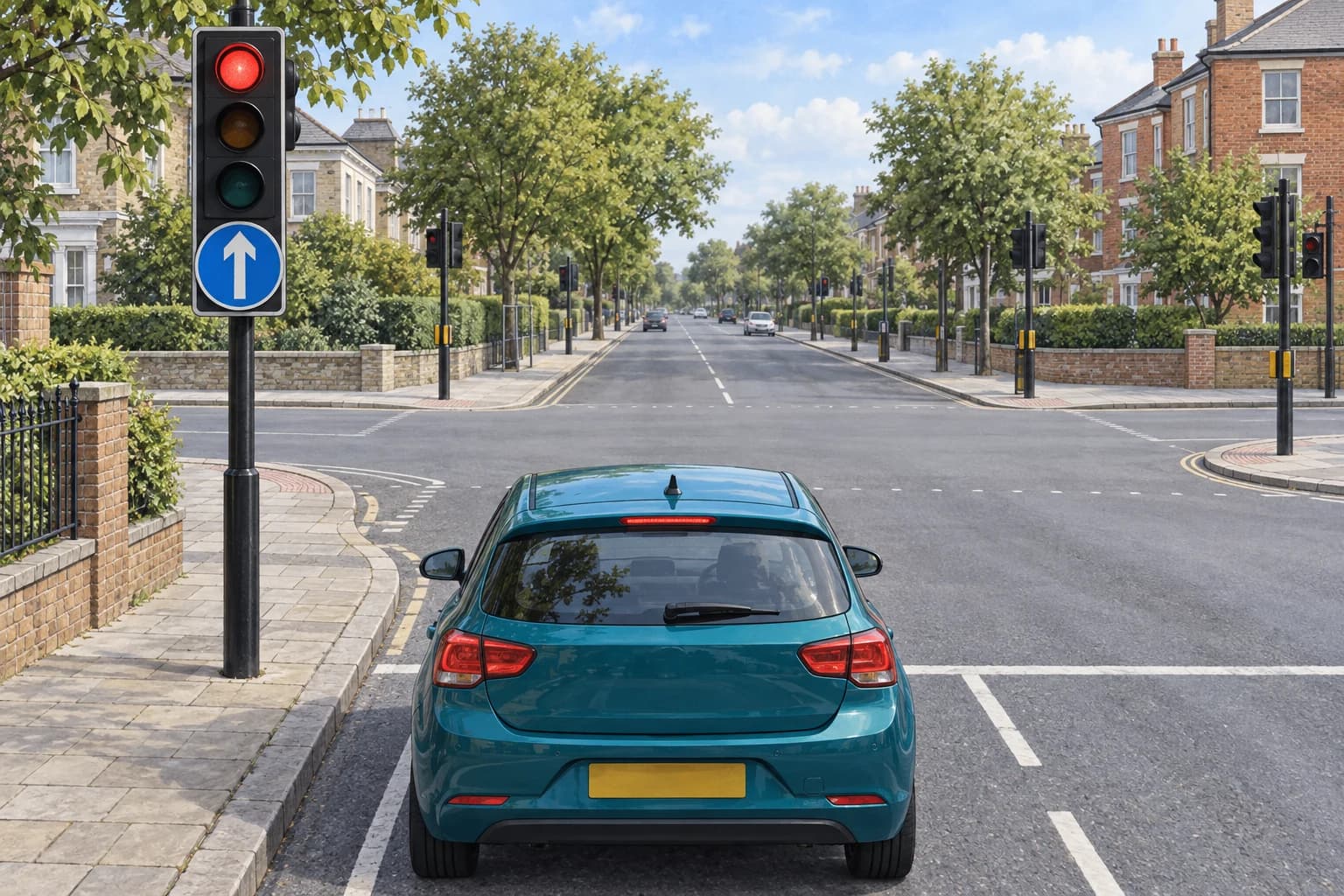
1. What does Kingston Code 32 mean?
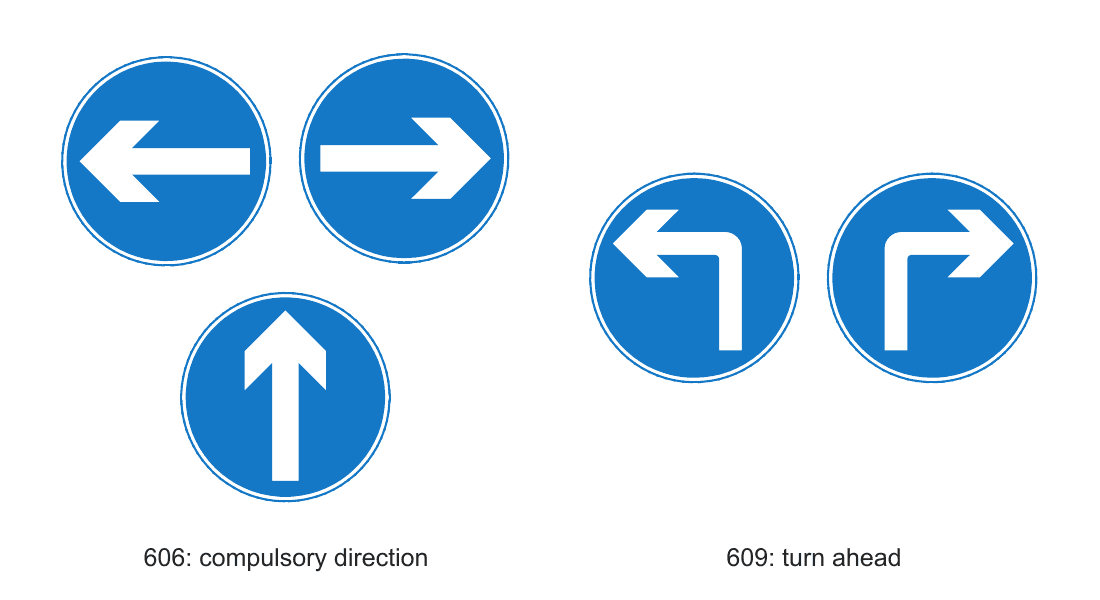
Code 32 means that your vehicle is alleged to have travelled in a different direction from the one required by a blue circular arrow sign. An upward arrow means ahead only; a horizontal arrow requires the indicated left or right movement. A bent arrow tells you to turn ahead.
Read the complete allegation on the PCN. Code 32d describes proceeding in the wrong direction and Code 32t describes turning in the wrong direction. The question is what this sign required on your approach and whether the recorded journey complied, not simply whether the manoeuvre was safe or the road was empty.
- Contravention
- Code 32: failing to proceed in the direction shown by the arrow on a blue sign
- Issuing authority
- Royal Borough of Kingston upon Thames
- Formal representation deadline
- 28 days beginning with service of the PCN.
- Penalty and discount
- Use the charge and discount printed on your PCN; the applicable amount depends on the notice and contravention date.
- Initial discount
- The initial 50% discount applies during the first 14 days beginning with the date of the PCN. A challenge does not automatically extend that period. Check the council's policy and any renewed offer in its reply.
- Appeal route
- Kingston, then London Tribunals after a formal Notice of Rejection.
2. What must Kingston establish?
The evidence must connect the sign, your approach and the movement alleged. A clear arrow photographed from a different direction does not establish what your driver could see.
Diagram 606 has a straight arrow pointing left, right or ahead. At a junction, it identifies the direction traffic must take. Diagram 609 has a bent arrow and indicates a compulsory turn ahead. These are instructions, not optional route advice.
An ahead-only sign can be attached beneath a traffic signal. The signal-mounted version of diagram 606 is prescribed separately in TSRGD Schedule 14. A clear ahead-only instruction does not need an additional red no-right-turn or no-left-turn sign to explain that a turn is prohibited.
Read any permitted exception plate with the arrow. A rectangular one-way sign, a diagonal keep-left or keep-right sign and a red prohibited-turn sign have different functions. In the standard code list, passing on the wrong side of a keep-left or keep-right sign is Code 38, while a prohibited turn is Code 50.
- The required direction: identify the actual arrow, its position and the junction or road length to which it applies. The PCN and its images should make the alleged failure understandable.
- The legal restriction: where an order is needed, its operative article, schedule or map must cover the approach and movement alleged. Some roundabout and dual-carriageway arrangements have specific statutory exceptions to the usual order requirement.
- Sign placement and visibility: check whether the sign faced your approach before you committed to the manoeuvre. For standalone signs, the Manual distinguishes a horizontal junction arrow, an ahead-only sign immediately before the junction and a turn-ahead sign normally placed in advance. There is no universal requirement for two blue signs.
- Lighting: identify whether the arrow was standalone, bollard-mounted or fixed to traffic signals. Standalone signs have conditional lighting rules; the signal-mounted version has its own internal-lighting requirement. An assessment must use the rule for the actual installation.
- The complete movement: CCTV should establish the vehicle, junction and direction taken. A still photograph of a vehicle near a sign may not show that it passed or disobeyed it. Compare any older sign photographs with the layout on the incident date.
- Liability and notice: check the PCN description, date of service and the owner or qualifying hire documents. A vehicle registration alone does not resolve a properly evidenced liability dispute.
3. Grounds and exemptions for a Kingston Code 32 appeal
Explain the particular fault in the allegation and attach evidence of it. The strongest point is the one that changes whether this movement was prohibited or proved.
An order may permit buses, local buses, taxis, cycles or authorised vehicles to make a movement that other traffic cannot. Where an exception applies, check the actual sign arrangement, the vehicle definition and the conditions of the permission. A taxi exception does not automatically cover private-hire vehicles.
A delivery, nearby address, Blue Badge or satnav instruction is not a general exemption from a blue direction arrow. The standard supplementary plates for diagrams 606 and 609 do not include an ordinary time-period plate; if a timed or unusual arrangement is relied upon, its legal basis and signing need checking.
If a road closure or unexpected obstruction affected the journey, provide the diversion information and evidence of what was happening. Distinguish an actual exception or failure of signing from a request for discretion. London adjudicators cannot allow an appeal solely because the circumstances were difficult.
- The sign did not face your approach, was obscured or could not reasonably be read before the decision point. Use approach photographs and the CCTV sequence, not a close-up taken from another direction.
- You complied with the required direction, or the evidence does not show the contrary movement. Mark the junction and the vehicle's route on a plan and identify the relevant recording times.
- The PCN did not adequately explain which direction requirement was contravened. Read its wording and photographs together; the absence of a particular word or suffix does not alone establish this ground.
- The order or applicable legal provision did not cover the movement alleged, or a relevant exception applied. Supply the operative wording and the documents showing why it matters to your vehicle and journey.
- The sign evidence does not establish the conditions on the incident date. Identify roadworks, changed signs or an approach missing from the authority's photographs.
- You were not the liable owner, the vehicle was used without your consent, or a qualifying hire transfers liability. Provide dated evidence appropriate to that ground.
4. How to make a formal representation to Kingston
Send formal representations to Kingston within 28 days beginning with service of the Code 32 PCN. Explain the ground relied upon and attach the evidence supporting it.
The initial 50% discount applies during the first 14 days beginning with the date of the PCN. A challenge does not automatically extend that period. Check the council's policy and any renewed offer in its reply.
- Open Kingston's PCN service below. Enter the PCN reference (prefix QT) and vehicle registration to find the notice and evidence.
- Use the council-linked Taranto portal with your QT PCN reference and vehicle registration. Review the available images or CCTV before choosing the challenge option.
- Upload evidence relevant to your reasons, such as photographs of the signs or a repair note for a breakdown. Kingston also accepts appeals by post to RBK Parking Services.
- To check an online appeal's progress, Kingston directs you to the PCN portal's 'Ticket History' after entering your PCN and vehicle registration through the 'Pay a PCN' lookup. Checking history is not a payment.
- Explain which part of the Code 32 allegation you dispute. Include the PCN reference, vehicle registration, your address and copies of photographs or records supporting each point.
- Postal alternative: RBK Parking Services, PO Box 5769, Dingwall, IV15 0AZ. Allow time for receipt before the deadline and retain proof of posting.
- Save the full submission, attachments and dated acknowledgement.
5. How long does Kingston have to respond?
London Tribunals says the authority "should normally respond to representations within 3 months". Keep Kingston's acknowledgement and the date your representations were received.
[11]6. If Kingston rejects your representation
A formal Notice of Rejection explains Kingston's decision and how to appeal to London Tribunals. You have 28 days beginning with service of that notice to pay or register your tribunal appeal.
Compare the reply with the Code 32 grounds and evidence you submitted. Identify any unanswered point, missing evidence or inconsistency between the restriction and the recorded event. Keep the rejection notice and the appeal details supplied with it.
[11]7. Taking your Kingston appeal to London Tribunals
London Tribunals is independent of Kingston. Use the registration instructions and verification details in the Notice of Rejection, upload your evidence and explain why the alleged Code 32 contravention or liability is disputed.
There is no fee to register the appeal. If it is refused, the full penalty is normally payable; an earlier discount does not automatically continue. If registering late, explain the delay so the adjudicator can decide whether to accept the appeal.
Read Kingston's evidence pack and respond to the points relevant to your case. Keep to the tribunal's directions and evidence deadlines.
[11][12]Tribunal examples relevant to Code 32
These London Tribunals decisions illustrate issues relevant to Code 32. They involve the authorities named below, not necessarily Kingston. Use the reasoning that matches your evidence; these are not Kingston-specific outcomes.
The blue arrows faced traffic approaching from the opposite direction
Case 2250421056 / 2025-12-10 / Adjudicator Sean Stanton-Dunne
Sean Stanton-Dunne allowed the appeal because the CCTV showed that the blue signs faced the opposite traffic stream and could not have been seen from the vehicle's approach.
Read the case commentary“I find for this reason that the alleged contravention did not occur.”
Sean Stanton-Dunne, case 2250421056
The PCN did not adequately identify the direction requirement
Case 2250597584 / 2025-12-16 / Adjudicator Edward Houghton
Edward Houghton allowed the appeal because, on the particular facts, the PCN did not adequately explain the grounds for the penalty. Its photographs did not resolve which type of direction sign was alleged to have been contravened.
Read the case commentary“It is therefore defective and no penalty may be demanded on the basis of it.”
Edward Houghton, case 2250597584
A clear ahead-only arrow did not need a second no-right-turn sign
Case 2250435312 / 2025-12-31 / Adjudicator Teresa Brennan
Teresa Brennan refused the appeal after finding that the blue ahead-only arrow on the traffic lights was clear and visible. CCTV showed a right turn, and the absence of an additional no-right-turn sign did not defeat the allegation.
Read the case commentary“There is no requirement for an additional no right turn sign.”
Teresa Brennan, case 2250435312
2025 London Tribunals results: shared context
103 of 349 recorded cases were allowed (29.5%).
| Recorded outcome | Cases |
|---|---|
| Allowed | 103 |
| Refused | 246 |
| Total | 349 |
Full Code 32 PCN Appeal Guide
Read the detailed legislation, signage requirements, exemptions and case analysis for this contravention.
Read the full Code 32 PCN Appeal GuideSources and references
- Standard contravention codes
Linked standard code list: Code 32 and suffixes d/t. Distinguish Code 29 one-way restrictions, Code 38 specified-side signs and Code 50 prohibited turns.
- TSRGD 2016, Schedule 3
Schedule 3 Part 2 items 1 (606) and 2 (609); Part 3 items 1-3; assigned Part 4 provisions 1, 2, 4 and Part 5 directions 1/2. Supplied statutory PDF pages 68-69 and 76-80 checked.
- TSRGD 2016, Schedule 14: signs fixed to traffic signals
Part 2 item 42 (606), Part 4 requirement 10, Part 6 directions 28-29 and paragraph 3(4): signal-mounted arrow, internal lighting, legal restriction and traffic-facing placement. Supplied PDF pages 467, 493, 497 and 500.
- Traffic Signs Manual, Chapter 3 (2019)
Chapter 3 paragraphs 4.2.1-4.2.2, 4.2.11, 4.3.1-4.3.3, 4.5.1-4.5.4 and 4.6.1: compulsory direction signs, permitted plates, siting and roundabout exception.
- Local Authorities' Traffic Orders Regulations 1996
Regulation 18: information about the effect of an order and maintenance of signs.
- London Local Authorities and Transport for London Act 2003
Section 4 and Schedule 1: scheduled section 36 signs, prescribed orders, owner liability, representations and appeals.
- London Tribunals: moving-traffic PCN enforcement
London representations, response expectation and independent appeal stages.
- London Tribunals: registers of appeals
Search the three linked case references. Statistics use the supplied Data-sheet cohort, unique references, 2025 decision dates and exact label 'Fail proceed in direction shown by arrow blue sign'.
- London-wide parking and traffic charges
Current moving-traffic charge: £160, with the applicable 50% early-payment reduction. Borough increases took effect on 7 April 2025.
- England's 2022 charging guidelines
Schedule 3 paragraphs 1-2: higher-level moving-traffic charges, bands of £60 or £70 and their 50% discounted amounts; apply the correct local band.
- London Tribunals: moving-traffic enforcement process
Representations within 28 days of service, normal three-month response and appeal after rejection.
- London Tribunals: preparing your appeal
Registering an appeal, verification details and supporting evidence.
- Kingston: Appeal a Penalty Charge Notice
Before you appeal; Appeal your PCN: Taranto link, evidence examples and postal address; After you submit your appeal: Ticket History instructions.
- Kingston: council-linked Taranto PCN portal
Welcome to the Penalty Charge Notice Portal: payment/challenge/evidence functions, QT prefix and vehicle registration fields. Linked from the council appeal page.
About Parking Mate UK
We assess real Code 32 decisions to identify the evidence that matters in a mandatory-direction appeal: the arrow facing the vehicle, the approach to the junction, the legal restriction and the complete movement on CCTV.
The 2025 London-wide analysis above covers 349 decisions: 103 allowed and 246 refused. Its stated category scope applies; these are not Kingston-only figures.
Send us your Kingston Code 32 PCN for a free assessment. Parking Mate UK prepares and submits your formal representation to Kingston and handles your London Tribunals appeal, with support online and on WhatsApp.
Check Your PCN