 Parking Mate UK
Building The UK's Best Automated Parking Ticket Appeal Service
Parking enforcement spent decades learning how to operate at scale. Parking Mate UK was built so motorists could finally do the same.
Our story
Leo Musami
Founder & Lead Case Manager
The first version of Parking Ticket Appeal OS was not artificial intelligence.
It was an Excel spreadsheet.
In 2018, Parking Mate UK founder Leo Musami was an experienced technology project manager dealing with a growing parking enforcement problem of his own. His professional life involved taking complicated programmes and breaking them down into requirements, deadlines, risks, dependencies and actions.
So when parking notices started arriving, he approached them in much the same way.
He built a tracker.
Every case had a reference number, issuing authority, date, amount, status, appeal date, next action and notes. It was a basic attempt to impose order on a process that was becoming increasingly difficult to follow.
It did not solve the problem.
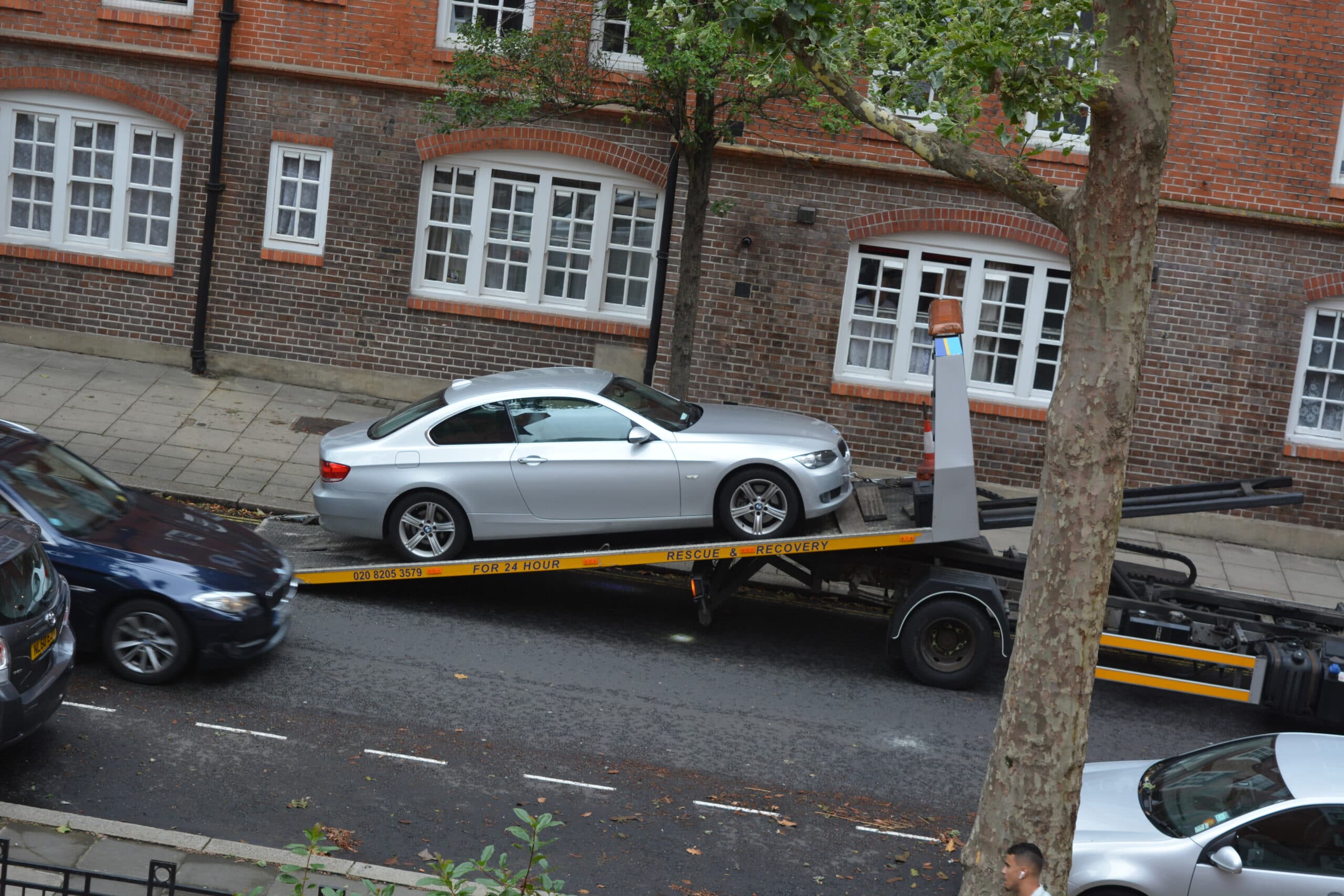
The enforcement continued. A parking dispute eventually escalated into bailiff action. His BMW was removed and later sold.
That experience became the starting point for Parking Mate UK.
Eight years later, the spreadsheet has evolved into Parking Ticket Appeal OS, an agentic platform designed to assess parking notices, understand the evidence, prepare the appropriate challenge, submit eligible appeals and continue managing the case as new decisions and documents arrive.
The technology is radically different.
The problem it is trying to solve has barely changed.
Parking enforcement became automated. The motorist did not.
Parking enforcement started with one £2 ticket
Britain's relationship with parking tickets began more than six decades ago.
On 19 September 1960, 40 traffic wardens were deployed in central London under powers introduced by the Road Traffic and Roads Improvement Act 1960. The first widely recorded ticket went to Dr Thomas Creighton, whose Ford Popular was parked outside a West End hotel while he attended a medical emergency. The £2 penalty was later cancelled. (Know Your Parking Rights)
It was a small beginning for a system that would eventually become highly organised, data-driven and automated.
Public-road enforcement gradually moved away from the police and into civil enforcement by local authorities. On private land, a different system developed around contract law.
A major change came with the Protection of Freedoms Act 2012. Subject to specific conditions, Schedule 4 created a route through which a private parking operator could recover an unpaid parking charge from a vehicle's registered keeper when the driver was not identified.
At the same time, Automatic Number Plate Recognition technology made it possible to monitor huge numbers of vehicles without a person standing in a car park.
Government figures show the scale of that change. Private parking operators made around 1.9 million DVLA registered-keeper data requests in 2012. That rose to 8.4 million in 2019 and 12.8 million in 2024. The Government itself describes DVLA requests as a useful proxy for the growth in private parking charges and identifies ANPR and keeper liability as factors behind that expansion. (GOV.UK)
That is around 35,000 keeper requests a day on average at the 2024 level.
The technology on the enforcement side had scaled.
The person receiving the notice still had to work out what to do next.
The system is complicated because not every parking ticket is the same
To most motorists, a parking ticket looks like a parking ticket.
Legally, that is not the case.
A council Penalty Charge Notice operates within a statutory civil enforcement system.
A private Parking Charge Notice is generally based on an alleged contractual obligation.
A London bus-lane or moving-traffic notice has its own procedural route.
A private parking rejection may lead to POPLA or the Independent Appeals Service.
A council rejection can move towards London Tribunals or the Traffic Penalty Tribunal.
A private parking dispute can eventually become a County Court claim.
A council case that passes through debt registration can reach the Traffic Enforcement Centre and enforcement agents.
By the time a motorist sees a letter headed "County Court Claim", "Order for Recovery" or an enforcement notice, the original question of where the car was parked may be only one part of the problem.
There are now procedures, evidence requirements and deadlines to understand.
That was one of the first lessons behind Parking Mate.
An appeal is rarely just one letter. It is a sequence of decisions.
When parking enforcement became personal
The origins of Parking Mate are not theoretical.
Leo had experienced what happens when a relatively small parking problem is allowed to move through the enforcement system.
There was the original notice.
Then correspondence.
Then increasing amounts.
Then enforcement.
Then the vehicle was gone.
For someone professionally used to delivering complicated technology programmes, the experience exposed an uncomfortable question.
If an experienced project manager needed a spreadsheet just to organise his own parking enforcement cases, what was the experience like for someone encountering the system for the first time?
Most people do not spend their working lives reading contracts, managing risks, interpreting requirements or tracking formal processes.
They receive a letter.
They worry about the amount.
They Google the wording.
They write what seems reasonable.
They hope somebody listens.
Parking Mate UK grew from the belief that this was not good enough.
The project manager became the parking case manager
Before Parking Mate, Leo's career was in technology delivery, consulting, business analysis and project management.
The titles varied, but the underlying job was remarkably consistent: understand a complicated system, establish what had been agreed, identify what was required, find where the process had failed and work out what needed to happen next.
Contractual detail was part of that work.
Large technology programmes operate through scopes, obligations, acceptance criteria, change controls and dependencies. If a client requests something outside what was agreed, the answer is not simply to argue about what feels fair. Someone has to understand the contract, establish what the parties committed to and determine the proper route forward.
That way of thinking became fundamental to Parking Mate.
Not because project management is legal practice. It is not.
But because both require disciplined reasoning.
What does the document actually say?
What rule applies?
What facts are proven?
What requirement has to be satisfied?
Has it been satisfied?
What exception applies?
What is the next procedural step?
Instead of treating parking disputes primarily as emotional disagreements, Parking Mate began treating them as systems that could be analysed.
Parking Mate started with humans, not AI
Parking Mate UK began operating in 2019.
The work was manual.
A notice would be read. The customer's circumstances would be understood. Evidence would be reviewed. The relevant issues would be researched. An appeal would be written.
Then another letter would arrive.
The case had to be read again.
Then another customer would need help.
Then another.
That manual work became important for two reasons.
First, it generated practical experience of what motorists actually struggle with.
Second, it exposed the limits of a human-only service.
A knowledgeable case manager can only read, assess, write and respond to a finite number of cases at once. At around 200 active matters, the combination of new appeals, customer questions, operator replies and later-stage documents began creating an obvious capacity problem.
The first attempt to solve it was automation.
We automated the letter first
Parking Mate began using WordPress, Gravity Forms and structured questions.
Instead of starting each appeal from a blank page, motorists could provide information through a form and the system could use those answers to produce documents much faster.
It worked.
Until it did not.
As volume increased, another weakness became obvious.
The documents were being produced faster, but the structure behind many of them was still based on templates.
A customer's story might change.
Their registration might change.
The operator might change.
A paragraph could be personalised.
But fundamentally similar cases could still produce fundamentally similar documents.
That created an important distinction which later shaped Parking Ticket Appeal OS:
Scaling document production was not the same as scaling expertise.
A template can reproduce knowledge.
It cannot independently decide which part of that knowledge matters to the case in front of it.
Parking Mate needed something better.
Then generative AI changed the equation
When modern large language models began becoming widely usable from 2023 onwards, the possibilities changed dramatically.
For the first time, software could take messy information supplied in ordinary language and turn it into coherent, individualised writing.
For a business that had spent years trying to automate dispute documents, it looked like the missing piece.
And in some ways it was.
But it created a different problem.
A fluent answer is not necessarily a correct answer.
A general-purpose AI model is designed to work across an enormous range of subjects. It can help draft a parking appeal, just as it can help write a marketing plan, explain a recipe or summarise a document.
That flexibility is its strength.
It is also why simply asking a chatbot to "write me an appeal for this parking ticket" is not the same as running a parking case.
A language model may not have every relevant document.
It may not know which stage the case has reached.
It may not know what happened before.
It may be given incomplete facts.
It may choose an argument that sounds impressive but does not apply.
And, like other generative AI systems, it can produce information that appears convincing but is wrong.
This problem is no longer hypothetical.
London's Environment and Traffic Adjudicators warned about AI-generated legal research after encountering appeals containing invented authorities. In one reported case, five of seven cases cited by an appellant did not exist, while the remaining two did not support the arguments being advanced. (London Councils)
The conclusion for Parking Mate was simple:
ChatGPT solved the blank-page problem. It did not solve the parking-case problem.
Forums and templates solved a different problem
Before generative AI, many motorists turned to online communities, consumer guides and appeal templates.
Those resources remain useful.
MoneySavingExpert, for example, maintains detailed private-parking guidance, a template appeal and an active parking forum where motorists can seek community support. Its guide also shows how much work self-service can involve: gathering evidence, checking the operator, understanding keeper liability, submitting the appeal and deciding what to do if the dispute continues. (MoneySavingExpert.com)
Forums can give motorists access to people with considerable experience.
Templates can prevent someone starting from nothing.
General AI can make writing faster.
But they share one characteristic.
The motorist still manages the case.
They decide what advice applies.
They collect the information.
They choose the argument.
They check whether it is correct.
They submit it.
They remember the deadline.
When the rejection arrives, they start again.
Parking Mate's objective became different.
The customer should provide the facts.
The system should do the parking appeal work.
The court cases changed how we thought about the problem
Parking Mate's experience did not stop with first-stage appeals.
Over the years, the business became involved in later-stage disputes, including more than 2,000 parking court claims according to company records.
Those cases exposed how small decisions early in a dispute can affect what happens much later.
One recurring issue involved the difference between the driver and the registered keeper.
Under Schedule 4 of the Protection of Freedoms Act 2012, private parking operators have to meet specified conditions if they want to transfer liability to a registered keeper in qualifying circumstances.
A motorist who does not understand that distinction can accidentally remove an issue from dispute simply by communicating without appreciating its legal significance.
The lesson was not that motorists should be dishonest.
Parking Mate's approach is the opposite.
Customers should tell Parking Mate exactly what happened.
The problem is expecting an ordinary driver to know which facts are legally important, how they should be presented and which legal consequences can follow from a sentence that seems completely harmless.
That is why Parking Ticket Appeal OS separates fact collection from legal and procedural articulation.
The customer explains what happened in ordinary language.
The platform works out what that information means for the case.
In 2026, POPLA confirmed the AI problem
The final confirmation arrived from the independent appeals system itself.
POPLA received more than 107,000 private parking appeals in its 2025 reporting year, a record volume. (Popla)
Its 2026 reporting also highlighted a growing problem with AI-generated appeals.
POPLA said it was seeing more appeals created using artificial intelligence, and warned that many were "highly generalised and contain misinformation". It said appellants using specific, personalised grounds were more likely to succeed. (Sky News)
For Parking Mate, this was not an argument against artificial intelligence.
It was an argument against using artificial intelligence without a specialist system around it.
By then, Parking Mate had already spent years reaching the same conclusion.
The answer was not another appeal generator.
The answer was to combine AI with structured case data, specialist workflows, parking rules, practical case experience and real appeal outcomes.
That became Parking Ticket Appeal OS.
From generating an appeal to handling the appeal
This is the biggest change in Parking Mate's history.
Earlier versions of the service helped motorists produce documents.
The motorist still had to do much of the administration themselves.
Parking Ticket Appeal OS changes the unit of automation.
The old system automated the document.
The new system is designed around the case.
Today, a motorist can send a parking notice through Parking Mate's website or WhatsApp and explain what happened.
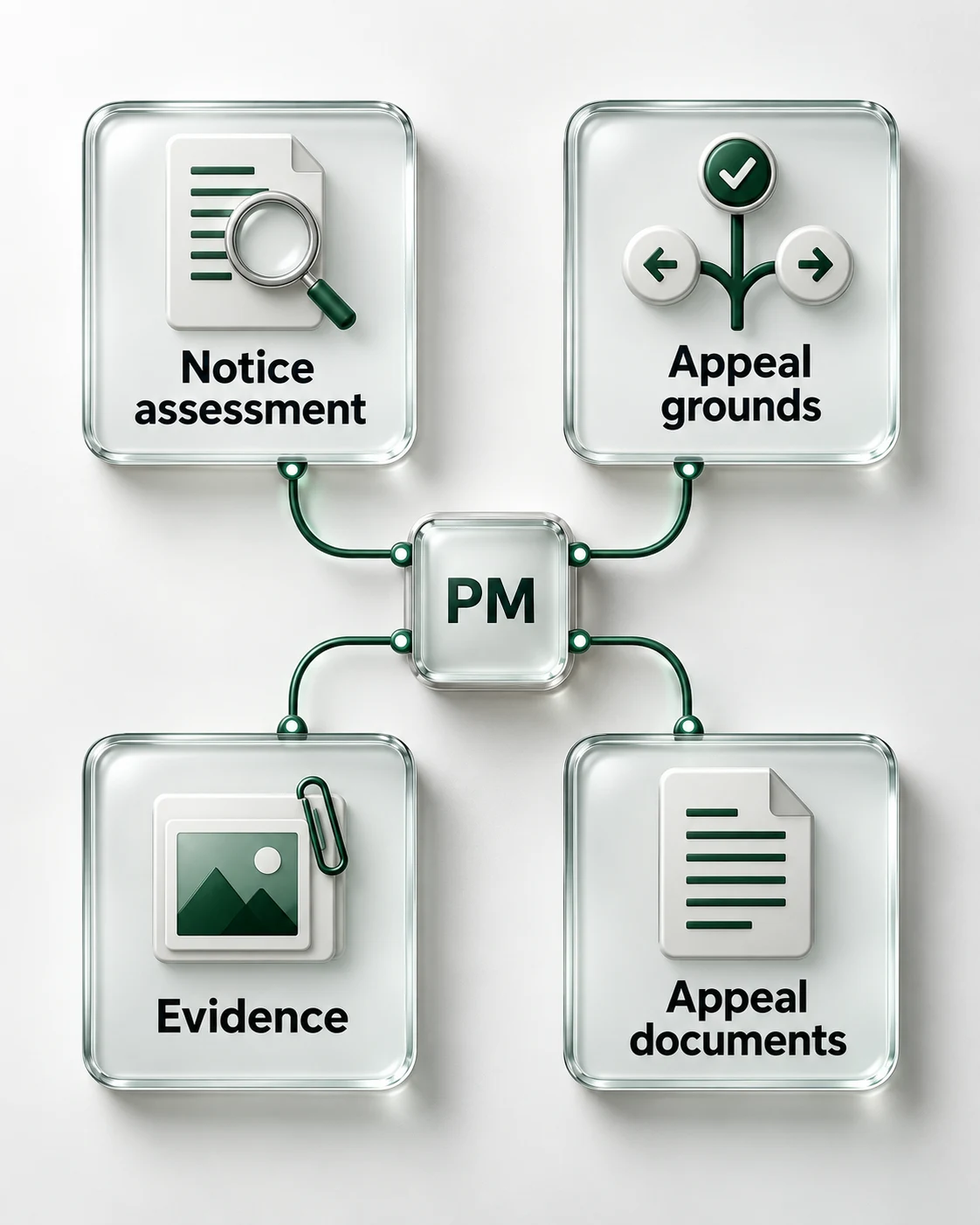
Parking Mate identifies the notice and stage, gathers the missing facts, assesses the available grounds, prepares the appropriate response and, for supported appeal stages, submits the appeal.
If a private appeal is rejected, Parking Mate can use the rejection and evidence to prepare and submit the eligible POPLA or IAS appeal.
Council and TfL representations can be handled through the applicable appeal route.
As new correspondence arrives, it becomes part of the same case rather than forcing the motorist to begin again. The current live service describes this simply: send the notice, answer the questions, and Parking Mate does the appeal work. (Parking Mate UK)
Court and enforcement work has different procedural requirements. Where a court, tribunal or statutory process requires the customer personally to sign, file or attend, Parking Mate prepares the applicable material and tells the customer what action is required.
That boundary matters.
The objective is not to pretend every legal process can be delegated to software.
It is to remove every piece of unnecessary work that can be.
Specialist agents, not one chatbot
Parking Ticket Appeal OS does not rely on one chatbot being asked to understand everything.
Different parts of a parking case require different jobs.
A document needs to be read and classified.
Facts need to be collected.
Evidence needs to be assessed.
The correct appeal route needs to be selected.
A document needs to be prepared.
A submission may need to be made.
A response has to be tracked.
A rejection may trigger a different appeal stage.
A court claim is not handled in the same way as a first Parking Charge Notice.
An Order for Recovery is not treated as though it were a POPLA rejection.
Parking Mate therefore uses specialist agents and structured workflows around a persistent case record.
The public does not need to understand the technical machinery behind that.
In fact, the entire point is that they should not have to.
The customer experience is intended to be simple:
Send the notice. Tell us what happened. Provide the evidence. Let Parking Mate handle the casework.
Behind that simple conversation sits years of parking case experience and a much more complicated operating system.
Built from cases, not just prompts
Parking Mate UK has now worked across more than 25,000 parking appeals and dispute workflows, according to company records.
Its current platform also reports more than 2,000 parking court claims and around 500,000 tribunal cases analysed. (Parking Mate UK)
The platform's knowledge has been built around three broad sources.
The first is practical case experience.
Years of reading notices, responding to operators, preparing appeals, dealing with court claims and seeing where motorists make mistakes created a body of operational knowledge that existed before modern AI.
The second is rules and procedure.
Parking Ticket Appeal OS is designed around the legal and regulatory framework applicable to the case, rather than asking a general model to invent an answer from scratch.
The third is outcomes.
Parking Mate has assembled a ten-year body of tribunal decision data covering accepted and rejected appeals from 2016 to 2026. The purpose is not simply to collect decisions. It is to understand patterns.
Which arguments succeeded?
Which failed?
What evidence mattered?
What reasoning did the adjudicator use?
When did two apparently similar cases produce different results, and why?
That allows Parking Mate to approach an appeal as an assessment problem before it becomes a writing problem.
Why speed matters
There is another reason the transition to agentic case handling matters.
Time.
When Parking Mate operated manually, human capacity was the bottleneck.
Knowing what to do was not enough. Someone still had to sit down, read the file, review the evidence and write the response.
Earlier automation reduced document delivery from hours to minutes.
The current system has moved considerably further.
Parking Mate's present internal performance benchmark is around 90 seconds to prepare many case-specific appeal documents or POPLA evidence comments once the relevant case files and evidence have been analysed.
In one recent workflow, Parking Ticket Appeal OS handled the work for a complete private parking appeal and subsequent POPLA appeal in under five minutes of system processing time.
The important point is not that AI can type quickly.
Everyone knows that.
The breakthrough is reducing the time required to apply accumulated case knowledge to an individual dispute.
That changes the economics of consumer representation.
One experienced person no longer has to personally reproduce the same knowledge every time a familiar procedural problem appears.
The experience can be designed into the system and applied again.
Enforcement already works this way
Parking companies did not reach today's scale by employing one person to manually create every notice.
Modern parking enforcement relies on software, cameras, structured data, automated workflows and standardised processes.
The same pattern extends beyond the first notice.
Written evidence submitted to Parliament about private parking bulk litigation estimated that specialist parking litigators were issuing between 400,000 and 500,000 County Court claims annually, representing a substantial share of County Court money claims. Those figures were estimates submitted as evidence rather than official court statistics, but they demonstrate the concern about the scale at which parking litigation is being processed.
There is nothing inherently wrong with an organisation using technology to operate efficiently.
The question Parking Mate asks is why efficiency should exist only on one side.
If an enforcement organisation can use systems to process cases consistently at scale, motorists should be able to access specialist systems capable of understanding and progressing their side too.
That is the bigger idea behind Parking Ticket Appeal OS.
Regulation alone will not remove the complexity
Parliament recognised problems within private parking when it passed the Parking (Code of Practice) Act 2019.
A government code was published in 2022 but later withdrawn following legal challenge. A further government consultation was held in 2025, with the Ministry of Housing, Communities and Local Government saying that Parliament had required a government code and that further progress was needed to raise standards. The published regulatory assessment still listed the implementation date as to be confirmed. (GOV.UK)
Better regulation matters.
Clearer signage matters.
Fairer appeals matter.
Better operator conduct matters.
But even a better-regulated system still requires a motorist to understand the notice they have received and respond correctly.
Parking Mate was built around the view that consumer protection should not depend entirely on every motorist becoming an expert.
Why WhatsApp is part of the answer
A parking appeal system can be legally sophisticated and still fail if ordinary people find it difficult to use.
Parking Mate has deliberately moved in the opposite direction.
A driver should not need to learn another complicated piece of software just because they received a ticket.
They already know how to take a photograph.
They already know how to send a WhatsApp message.
So that is where the process can begin.
A motorist can send the notice, explain what happened and provide whatever additional evidence Parking Mate needs.
Months later, if another letter arrives, they can return with that document and continue the case.
The complexity sits behind the conversation.
That is deliberate.
The front end should feel simple precisely because the back end is not.
The ambition: apply experience once, then make it available at scale
One idea helped shape the final vision for Parking Mate.
What happens when artificial intelligence allows a very small team to build systems that previously required hundreds or thousands of people?
For Parking Mate, that became a more specific question:
If the experience from thousands of appeals and court cases can be translated into specialist systems, why should that experience only benefit the next customer a human happens to have time to speak to?
A lesson from one court case can become a rule for future cases.
A recurring defect found across appeals can become part of an assessment.
A tribunal decision can inform how evidence is weighted.
A new enforcement document can create a new case pathway.
Humans remain important.
But their highest-value role changes.
Instead of repeatedly performing every routine task, they can improve the system, analyse new situations, review difficult exceptions and encode what they learn for the cases that follow.
That is the direction Parking Mate UK is taking.
What began with one motorist is now built for millions
Parking Mate did not start because artificial intelligence became fashionable.
The problem came first.
Then came the manual service.
Then the spreadsheet.
Then the forms.
Then the templates.
Then generative AI.
Then years of court, tribunal and enforcement experience.
Each stage solved one problem and exposed another.
The current Parking Ticket Appeal OS is the result of that progression.
It is designed around a simple principle:
A motorist should not have to become a parking-law expert simply because a notice landed on their windscreen or through their letterbox.
Leo's first attempt to manage parking enforcement was a spreadsheet containing references, dates, amounts and actions.
Today, Parking Mate UK can take a photograph of a notice, turn it into a structured case, assess what matters, prepare the response and manage supported appeal stages through the same system.
The objective is not to make disputes more complicated.
It is to move the complexity away from the motorist.
In 2018, Leo knew what it felt like to watch a parking problem escalate until a vehicle was taken away.
Parking Mate UK was built so that when the next motorist receives a notice and does not know what to do, they do not have to face that process alone.
Send us the ticket. Tell us what happened. Parking Mate will work out what comes next.
About Parking Mate UK
Parking Mate UK is a UK parking dispute platform operated by Civil Disputes UK Ltd. Parking Ticket Appeal OS supports motorists dealing with private Parking Charge Notices, council and TfL Penalty Charge Notices, independent appeals, court claims and parking enforcement matters.
Start with a free assessment online or send your parking notice through WhatsApp.
The company behind Parking Mate UK
Parking Mate UK is operated by Civil Disputes UK Ltd, company number 16577339.
Registered office3rd Floor, 86-90 Paul Street, London, England, United Kingdom, EC2A 4NE.