 Parking Mate UK
Transport for London / Code 36
TfL Code 36 PCN Appeal: Cycle Lane
Received a TfL PCN for entering a mandatory cycle lane? We check the lane marking, operating restriction and your vehicle's actual movement before preparing and submitting your Code 36 appeal.
Start with a free TfL Code 36 assessment. Our £9.99 Automated Penalty Charge Appeal Service prepares and submits your challenge and handles your tribunal appeal.
Check Your PCN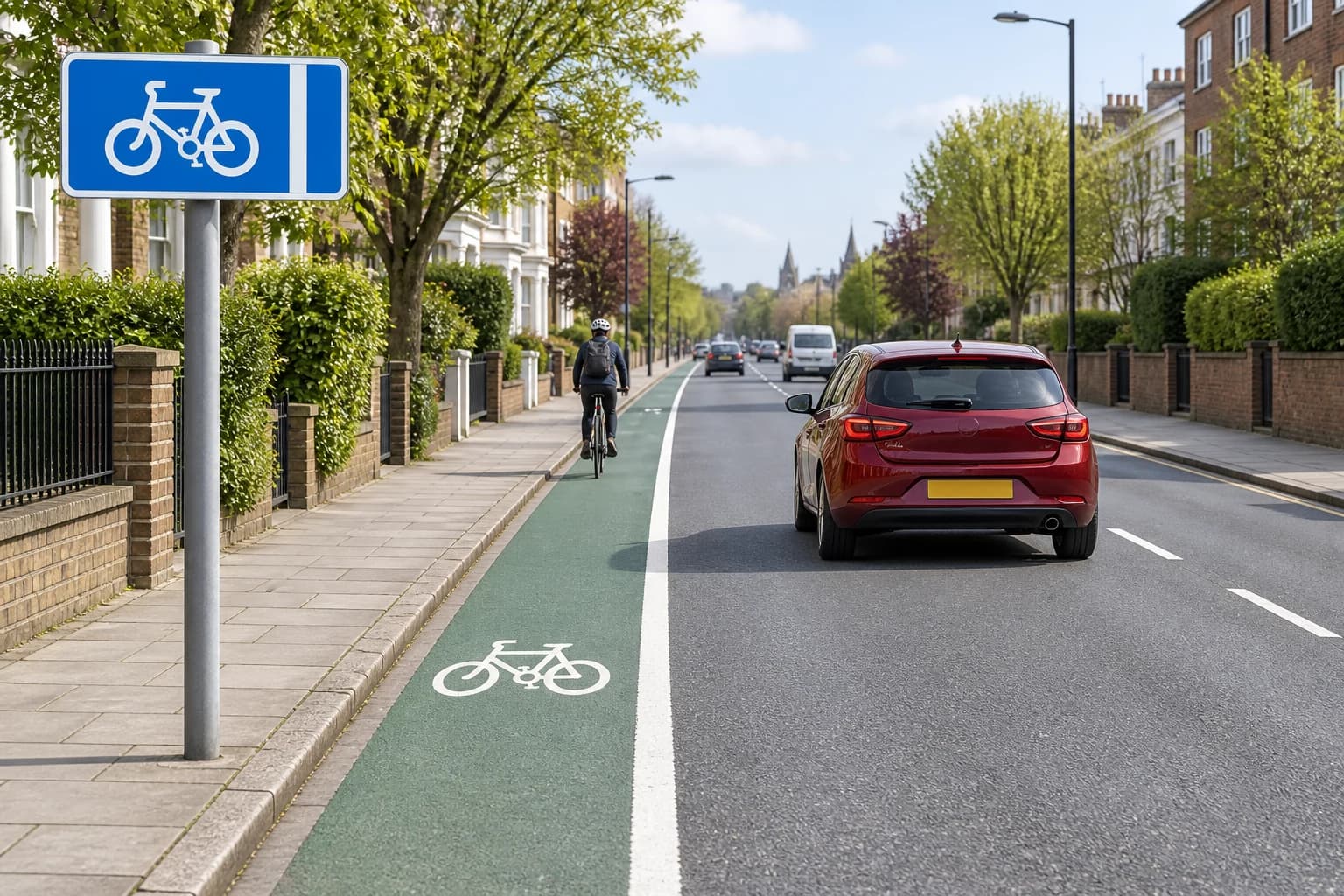
1. What does TfL Code 36 mean?
TfL Code 36 concerns driving in a mandatory cycle lane when prohibited. Identify the precise allegation: entering a protected cycle lane is different from parking or stopping beside one.
- Contravention
- Code 36: being in a mandatory cycle lane
- Issuing authority
- Transport for London
- Formal representation deadline
- 28 days beginning with service of the PCN.
- Appeal route
- TfL, then London Tribunals after a formal Notice of Rejection.
- Penalty and discount
- £160, reduced by 50% to £80 during the applicable discount period.
- Appealing during the discount
- TfL pauses the discount period when it receives your representation within that period. If rejected, the remaining discount period resumes from the point it was paused.
2. What must TfL establish?
Check the cycle-lane signs, boundary marking and start and end of the restriction. Establish whether the alleged location was a mandatory lane and which conditions applied at the time.
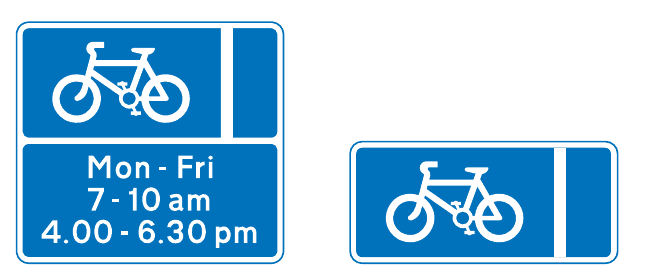
- Mandatory lane, not another facility: identify the solid boundary and the part of the carriageway reserved for cycles. Distinguish a broken-line section, separate track or cycle waiting area at traffic lights.
- Operating period: compare the CCTV timestamp with the time panel and the legal restriction. A missing time panel on diagram 959.1 normally means continuous operation, not that the restriction is inactive.
- Legal basis: a mandatory with-flow lane can be provided without a traffic order. If the PCN relies on a traffic management order, its operative provisions must cover the lane and movement alleged. A mandatory contraflow lane requires an order.
- Complete movement: examine where the vehicle crossed the boundary and what happened next. A recording ending at the apparent stop may not resolve an explanation that the vehicle was turning into adjacent premises.
- Adequate signs and markings: assess visibility from the approach and the condition of the boundary. Reflectorisation and sign illumination have their own rules; there is no universal requirement for two upright signs or direct lighting on every cycle-lane sign.
- Correct vehicle and person: check the registration and vehicle appearance, owner or hire records and any evidence that the number plate was cloned.
3. Grounds and exemptions for a TfL Code 36 appeal
Any access, crossing or emergency exception must belong to the restriction at that location. Do not treat every need to turn across a cycle lane as unrestricted permission to drive along it.
- The vehicle did not enter the restricted cycle lane shown in the allegation.
- The restriction was not operating or the relevant signs and markings did not adequately convey it.
- The recorded manoeuvre fell within an applicable exception or authorised direction. Explain the movement and supply the supporting evidence.
- If ownership, hire liability, payment or the amount demanded is disputed, explain the applicable statutory ground and attach the records supporting it.
4. How to challenge your PCN with TfL
Send your formal representation to TfL within 28 days beginning with service of the Code 36 PCN.
The initial 50% discount runs for 14 days beginning with the date of the PCN. TfL pauses the discount period when it receives your representation within that period. If rejected, the remaining discount period resumes from the point it was paused.
- Open TfL's PCN service below using your PCN number and vehicle registration.
- Explain the Code 36 ground you rely on. Include evidence of the mandatory cycle-lane boundary, restriction and recorded vehicle movement.
- Submit in the name of the person or organisation on the notice, including written authorisation where a representative acts for them.
- For a postal representation, use Red routes, PO Box 335, Darlington DL1 9PU. Keep a copy and allow time for delivery.
- Save your completed submission, attachments and dated acknowledgement.
5. How long does TfL have to respond?
London Tribunals says the authority "should normally respond to representations within 3 months". Keep the acknowledgement showing when TfL received yours.
[13]6. If TfL rejects your representation
Following a formal rejection, you have 28 days beginning with service to pay or register an appeal with London Tribunals. Use the appeal instructions and verification details supplied with TfL's decision.
[13]7. Taking your TfL appeal to London Tribunals
Register with the Environment and Traffic Adjudicators at London Tribunals, the independent tribunal for this PCN. Set out your Code 36 grounds and include the notice, your representation and the supporting evidence.
If TfL contests the appeal, review its evidence pack against the mandatory cycle-lane boundary, restriction and recorded vehicle movement. Respond to the tribunal's directions by the dates it gives you.
There is no fee to register an appeal. If refused, the full penalty is normally payable; the earlier discount does not automatically continue.
[13][14]Other TfL notices and appeal routes
This contravention uses the Environment and Traffic Adjudicators route. TfL's ULEZ, LEZ, Congestion Charge and tunnel charging penalties use the separate Road User Charging Adjudicators route.
[18]Tribunal examples relevant to Code 36
These London Tribunals decisions illustrate issues relevant to Code 36. They involve the authorities named below, not necessarily TfL. Use the reasoning that matches your evidence; these are not TfL-specific outcomes.
The CCTV ended before the driveway explanation could be tested
Case 2250194668 / 2025-08-18 / Adjudicator Carl Teper
Carl Teper allowed the appeal because the recording stopped at the point the vehicle appeared to stop. Without the onward sequence, the adjudicator could not test the motorist's explanation that they were manoeuvring into a driveway.
Read the case commentary“Accordingly, I am not satisfied that the Authority has proved this contravention.”
Carl Teper, case 2250194668
Police confirmation supported the cloned-vehicle explanation
Case 2250229161 / 2025-09-04 / Adjudicator Edward Houghton
Edward Houghton allowed the appeal after accepting that the vehicle had been cloned on the balance of probabilities. A police email supported the explanation, and the authority's attempt to discredit it was unconvincing.
Read the case commentary“The Appeal is therefore allowed.”
Edward Houghton, case 2250229161
A private-hire pickup did not create permission to enter the cycle lane
Case 2250413444 / 2025-12-22 / Adjudicator Herjinder Mann
Herjinder Mann refused the appeal after the CCTV showed the vehicle entering and stopping in the cycle lane. The driver's explanation that they were collecting passengers for their safety did not establish an exemption.
Read the case commentary“There is no exemption for private hire drivers to enter cycle lanes.”
Herjinder Mann, case 2250413444
2025 London Tribunals results: shared context
2 of 7 recorded cases were allowed (28.6%).
| Recorded outcome | Cases |
|---|---|
| Allowed | 2 |
| Refused | 5 |
| Total | 7 |
Full Code 36 PCN Appeal Guide
Read the detailed legislation, signage requirements, exemptions and case analysis for this contravention.
Read the full Code 36 PCN Appeal GuideSources and references
- Standard contravention codes
Linked code list, page 2: Code 36, being in a mandatory cycle lane, suffix j.
- TSRGD 2016, Schedule 9
Part 4 item 9 (959.1), Part 6 item 7 (1049B), Part 7 paragraph 12, Part 8 paragraphs 1 and 9, Part 9 direction 1(2). Supplied PDF pages 144, 150, 168-170 and 173; regulation 8, page 11.
- Traffic Signs Manual, Chapter 3 (2019)
Sections 11.1, 11.3-11.6 and 11.11: carriageway lanes versus tracks, mandatory versus advisory, signs, boundary markings, with-flow and contraflow. Figure 11-4: PDF page 123, printed page 121.
- Highway Code: Rule 140
Rule 140: solid and broken cycle-lane boundaries, cycle tracks and yielding to cyclists when crossing.
- Know Your Traffic Signs: bus and cycle signs
Cycle signs section: mandatory with-flow, advisory and contraflow lane signs, markings and cycle-track signs.
- TSRGD 2016, Schedule 11
Part 2 items 38 and 44 (958.1 advance and 967 advisory signs); Part 4 boundary/lead-in and cycle-symbol markings. Read with TSM 11.3-11.4.
- Local Authorities' Traffic Orders Regulations 1996
Regulation 18: information about the effect of an order and maintenance of signs where an order applies.
- London Local Authorities and Transport for London Act 2003
Section 4 and Schedule 1: applicable enforcement basis, owner liability, representations and appeals. Check the actual prescribed order or scheduled-sign route, not the code number alone.
- London Tribunals: moving-traffic PCN enforcement
Representations received within 28 days of PCN service; normal three-month response expectation; tribunal appeal within 28 days of rejection service.
- London Tribunals: registers of appeals
Search the linked references. Statistics use the supplied archive, 2025 decision dates and exact 'Being in a mandatory cycle lane' label; all seven full reasons reviewed.
- London Councils: parking and traffic charges
Borough minor moving-traffic charge £160, reduced by 50% for qualifying early payment. Not a universal charge for every London scheme.
- England's 2022 charging guidelines
Schedule 3 paragraphs 1-2: higher-level moving-traffic bands £60 or £70 and their 50% discounted amounts. Apply the relevant charging scheme.
- London Tribunals: moving-traffic enforcement process
Representations within 28 days of service, normal three-month response and appeal after rejection.
- London Tribunals: preparing your appeal
Registering an appeal, verification details and supporting evidence.
- TfL: challenge a Penalty Charge Notice
Online and postal representations, authority to act and the discount-pause policy.
- TfL: red routes and penalty charges
TfL's road network and the current traffic-enforcement penalty.
- TfL: rules of red routes
Parking, loading, bus lanes, cycle lanes, yellow boxes and prohibited turns on TfL roads.
- London Tribunals: registers of appeals
Separate ETA and RUCA appeal registers.
About Parking Mate UK
For a TfL Code 36 PCN, we focus on the mandatory cycle-lane boundary, restriction and recorded vehicle movement. Our assessment combines your notice and evidence with relevant tribunal decisions.
Parking Mate UK prepares and submits your challenge to TfL, tracks the response and handles your London Tribunals appeal. Send us your PCN for a free assessment and continue online or on WhatsApp.
Check Your PCN