Parking Mate UK
How to Challenge a Bus Lane PCN from Your Council
Guide to challenging council bus lane PCNs. Covers signage defects, camera evidence issues, permitted vehicle use, and the three-stage appeal process.
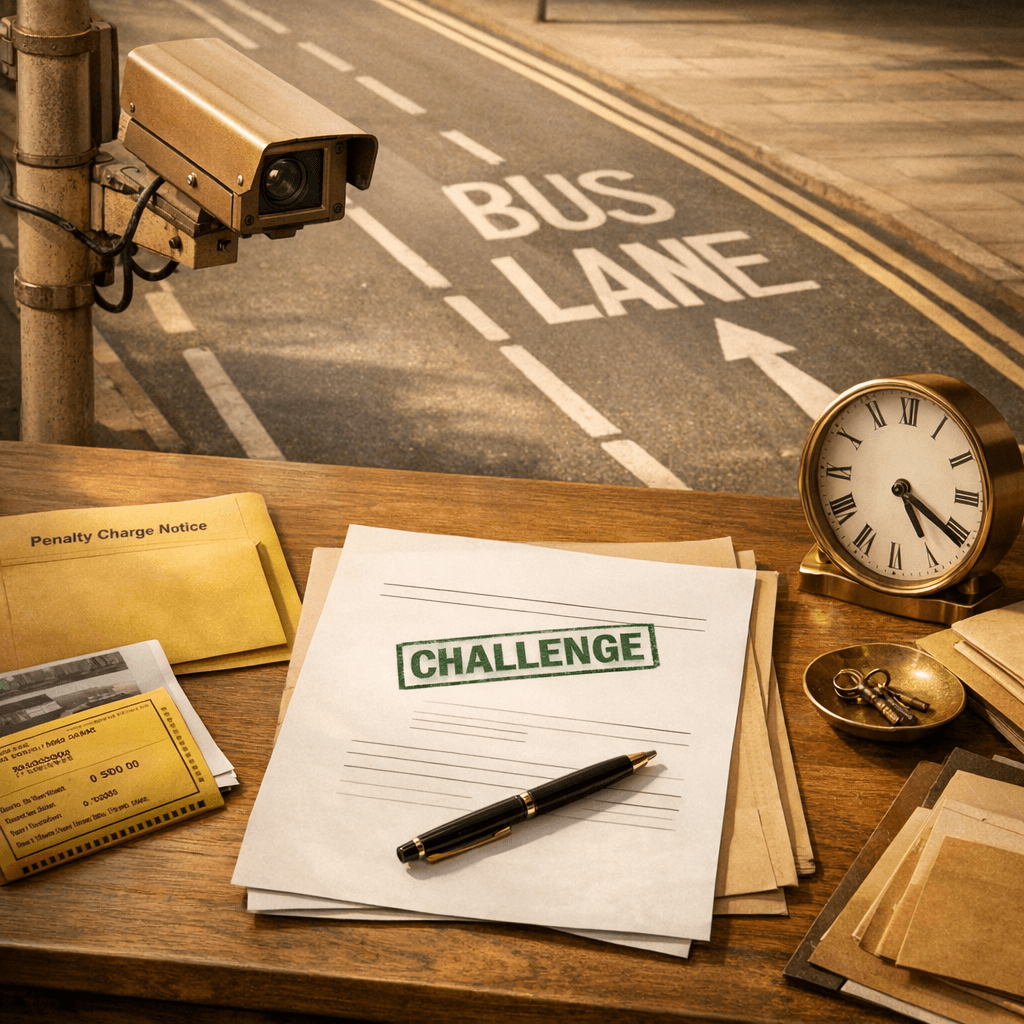
Bus Lane Penalty Charge Notices. Your Appeal Options
Bus lane PCNs are issued by local councils when a camera records a vehicle driving in a bus lane during restricted hours. These are civil penalties under the Traffic Management Act 2004, not criminal offences. They can be challenged on several grounds.
Common Grounds for Appeal
Signage and road markings Bus lane restrictions must be clearly signed with compliant road markings. If the signs were missing, obscured, or confusing, the PCN may be invalid. Common issues include signs hidden by trees, faded road markings, and unclear restriction hours.
Camera evidence issues The council must provide clear camera evidence showing your vehicle in the bus lane during restricted hours. If the footage is unclear, the timestamp is questionable, or the camera angle does not definitively show a contravention, you have grounds to challenge.
Permitted use Many bus lanes permit certain vehicles during certain hours. Taxis, cyclists, motorcycles, and emergency vehicles are often exempt. If you were using the bus lane in a permitted vehicle, the PCN should not have been issued.
Unavoidable circumstances If you entered the bus lane to avoid an accident, allow an emergency vehicle to pass, or because road works directed you into it, you may have a valid defence.
Procedural errors The council must follow strict procedures under TMA 2004 when issuing and serving the PCN. Failure to serve the Notice to Owner within the required timeframe or errors in the PCN documentation can invalidate the charge.
The Appeal Process
- Informal challenge within 14 days. write to the council explaining your grounds 2. Formal representations within 28 days of the Notice to Owner. a more structured appeal citing specific legislation 3. Tribunal appeal. if the council rejects your representations, escalate to the London Tribunals (London) or Traffic Penalty Tribunal (rest of England and Wales)
Tribunal Success Rates
Official data shows that bus lane appeals have a significant success rate at tribunal, particularly where signage defects are identified. Councils often do not contest bus lane appeals when the signage is clearly inadequate.
Check Your Bus Lane PCN
Upload your bus lane PCN for a full assessment. Parking Mate UK checks for signage compliance, procedural errors, and evidence quality specific to bus lane enforcement.