Parking Mate UK
Yellow box junction appeals
Code 31 PCN Appeal: How to Challenge a Yellow Box Junction PCN
Received a PCN for stopping in a yellow box? A Code 31 appeal depends on how your vehicle entered, where it stopped and what forced it to stop. Parking Mate UK checks the full CCTV sequence, the road marking and any applicable exception, then prepares and submits your formal representation.
Start with a free Code 31 assessment. Our £9.99 Automated Penalty Charge Appeal Service includes preparing and submitting your formal representation and tribunal appeal.
Check Your PCN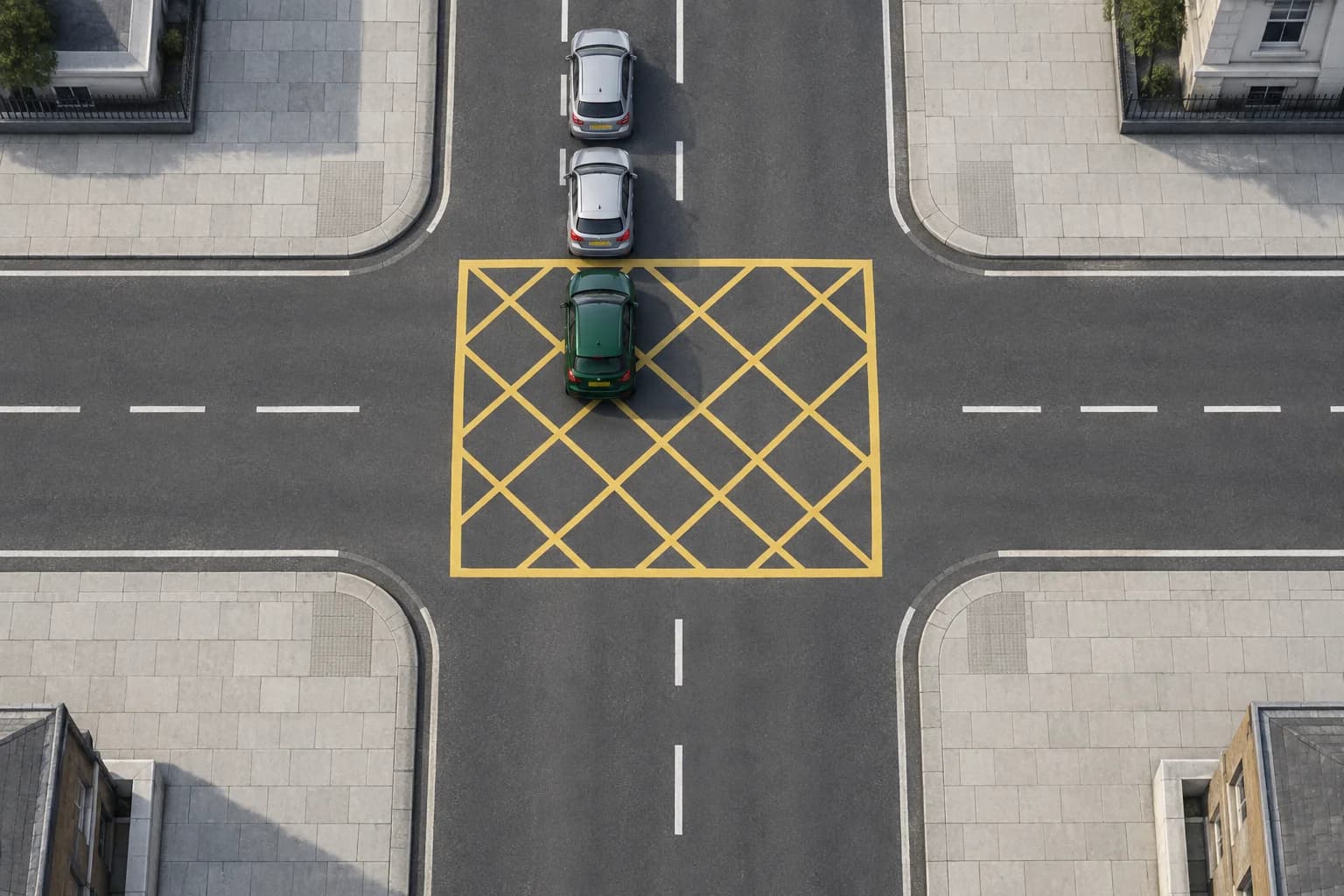
1. What does contravention Code 31 mean?
Code 31 alleges that a vehicle entered and stopped in a yellow box junction when prohibited. The ordinary rule concerns a vehicle that has to stop inside the box because of stationary vehicles. It is not enough to treat any photograph of a vehicle over yellow paint as the whole allegation.
Start with the complete recording: identify when the vehicle crossed into the box, whether any part of it became stationary within the boundary and what caused that stop. Slow movement and a complete stop are different. A green traffic light does not remove the box-junction restriction.
- Contravention
- Code 31: entering and stopping in a box junction when prohibited
- Restriction
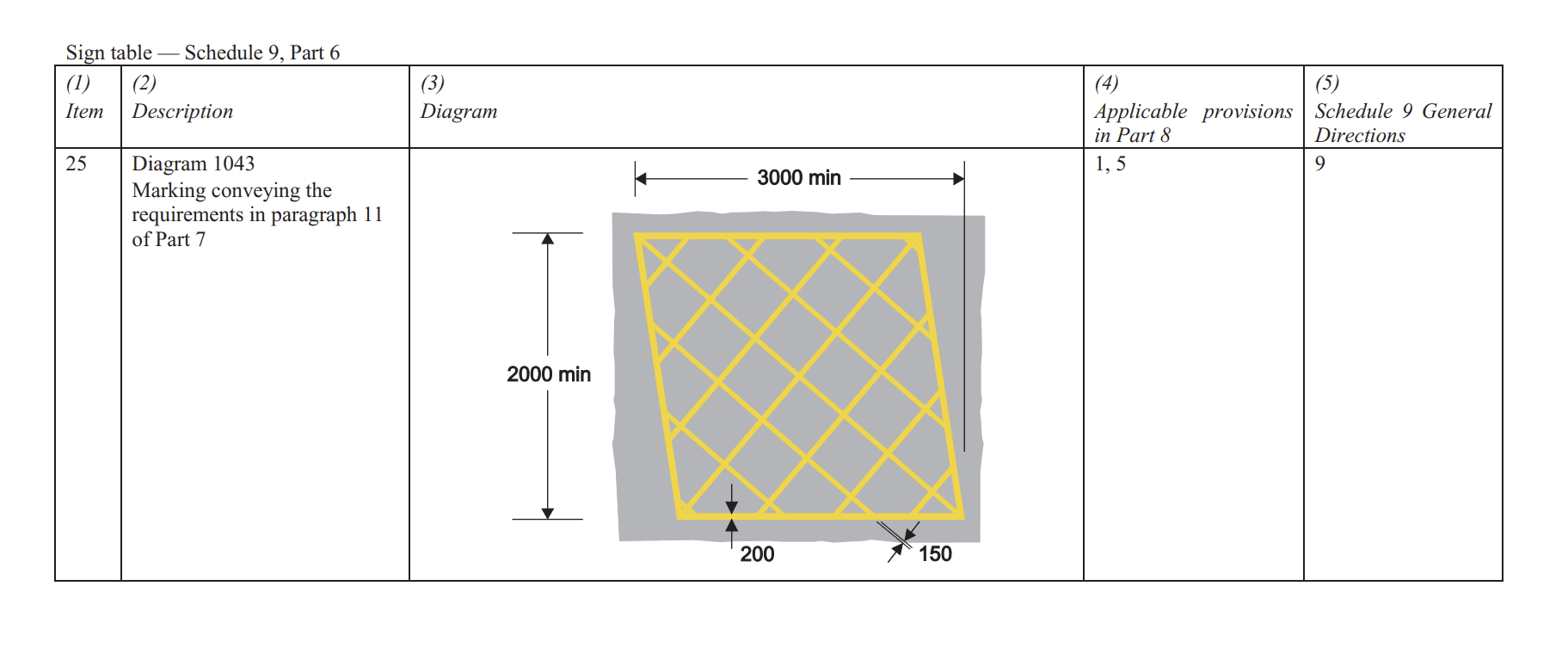
- Yellow criss-cross road marking, diagram 1043
- Key evidence
- The vehicle's entry, any complete stop and the traffic causing it
- Penalty amount
- London: £160, reduced to £80 during the initial discount period. England outside London: £60 or £70, reduced to £30 or £35, according to the applicable charging band. Follow the notice for Wales and the discount deadline.
- Representations
- London's 2003 Act and England's 2022 scheme: normally within 28 days beginning with service. Follow the separate Welsh procedure for Welsh notices.
- Independent appeal
- London Tribunals for London; the Traffic Penalty Tribunal for the relevant schemes elsewhere in England and Wales
2. Which yellow-box markings are required?
The yellow criss-cross road marking is the sign. Diagram 1043 is prescribed in TSRGD 2016, Schedule 9, Part 6, item 25. Read the drawing with its permitted variations, Part 7 paragraph 11 and the applicable Part 8 requirements; an older diagram reproduced online is not a complete compliance test.
An ordinary yellow box does not need two upright signs, an advance warning sign or a separate traffic regulation order to create the box restriction. Check the visibility and condition of the actual road marking. If you challenge its layout, explain the relevant requirement and how the location or markings fail it rather than simply saying the box is too large.
3. What must the authority establish?
The evidence and legal basis must fit the box and the event shown. For an ordinary junction, work through these checks in order.
- A qualifying box: paragraph 11(6) covers road junctions, gyratory systems or roundabouts, certain narrow two-way roads and the road adjacent to emergency-service premises. The conditions are not identical for every location.
- A sufficiently clear, prescribed or authorised marking: compare the yellow pattern, boundary and actual location with the relevant legislation. The Traffic Signs Manual provides design guidance; departing from guidance is not automatically a statutory defect.
- Entry and a stop within the box: paragraph 11(7) includes a vehicle partly within the box. Identify the wheel movement and boundary rather than relying only on a timestamped still.
- The cause of the stop: under the ordinary paragraph 11(1) rule, the vehicle must have had to stop because of stationary vehicles. Identify those vehicles and any genuine intervening event.
- The appropriate notice and liability: check the location, vehicle identity, service, required wording and statutory ground relevant to the recipient. A driver's identity alone does not decide owner liability.
4. Grounds for appealing a Code 31 PCN
Build the representation around what the recording establishes, not a list of generic parking arguments. Useful grounds depend on the actual sequence.
- No complete stop was proved: identify continuing movement or footage too unclear to establish a stop on the balance of probabilities.
- The stop was not forced by stationary vehicles: show the available space or other event that actually caused the stop. The tribunal examples below illustrate the difference.
- The right-turn exception applied: identify the intended turn and show that only oncoming traffic or other vehicles waiting to complete a right turn prevented it.
- A material marking or location problem: explain the statutory provision and support the point with wide photographs, measurements or an authorised-layout comparison.
- The PCN or liability is wrong: provide the relevant documents for a wrongly identified or cloned vehicle, ownership or hire issue, or a material notice defect. Do not assume that every clerical error invalidates a PCN.
5. Exceptions and arguments that need care
The right-turn exception is narrow. At a junction between roads, paragraph 11(3) applies where a vehicle entered to turn right and was prevented from completing that turn by oncoming vehicles or vehicles stationary while waiting to turn right. It does not exempt a driver who turns right and then queues behind stationary traffic blocking the exit.
Paragraphs 11(4) and (5) provide a conditional exception for specified emergency-service and related purposes where obeying the prohibition would hinder that use. An ordinary delivery, passenger collection, Blue Badge or personal urgency is not that statutory exception.
There is no general five-second or ten-second allowance. Adjudicators assess the facts; a short stop is not a guaranteed cancellation. Saying that you obstructed nobody, followed a satnav or expected the queue to move is not, by itself, an answer to the allegation. You may ask the authority to exercise discretion for mitigation, but that differs from proving a statutory ground at tribunal.
[1][2][4]6. How to make a formal representation
For a London Code 31 PCN, submit formal representations to the issuing authority using the details on the notice. London Tribunals states they must be received "within 28 days of the date the Penalty Charge Notice is served".
For the English 2022 scheme outside London, the postal PCN normally provides the formal representation route and a 28-day period beginning with service. Wales has separate regulations. Use the legislation and submission instructions on the notice.
- Open the issuing authority's official PCN evidence and challenge portal. Enter the PCN reference and vehicle registration.
- Watch the complete CCTV sequence. Note the entry time, start and end of any stop, box boundary and vehicles involved. Request missing footage promptly, but do not assume the request pauses the deadline.
- State the applicable ground and explain why it fits this sequence. Attach timestamped images, dashcam footage or documents that support it. Distinguish a statutory ground from a request for discretion.
- Ask the authority to address each material point and identify the evidence it relies on. Keep your submitted text, attachments and dated acknowledgement.
Will appealing affect the 50% discount?
The 50% reduction is an early-payment discount, not a discount for making an appeal. Check the reduced amount and payment deadline on your PCN before deciding whether to pay or challenge it. The discount deadline and the deadline for representations are not necessarily the same.
An early challenge may give you another opportunity to pay the discounted amount if it is rejected. Check the issuing authority's policy and the terms of its reply; a renewed discount is not automatic for every notice. Submit through the correct challenge route and keep the dated confirmation.
If you take the case to the tribunal, do not assume the discount remains available. An allowed appeal cancels the penalty. If the appeal is refused, the full penalty is normally payable. Read the rejection and tribunal decision for the payment instructions.
7. How long does the authority have to respond?
London Tribunals states that the authority "should normally respond to representations within 3 months".
For formal representations under England's 2022 regulations outside London, the authority must serve its decision within 56 days of receiving them. For a Welsh PCN, follow the separate Welsh regulations.
[4][6][5]8. Check the Notice of Rejection and evidence
A rejection should address the representation and explain why the authority still considers the penalty payable. Compare its explanation with your actual point: does it identify a complete stop, the stationary vehicles said to have caused it and why a claimed exception was rejected? A generic statement that the car was in the box does not answer every possible dispute.
Check the notice's payment and tribunal instructions, date of service and any renewed discount offer. Ask for missing recording or documents needed to understand the allegation and keep the request. Do not miss the tribunal deadline while waiting for an answer. At tribunal, review the authority's evidence pack against the original PCN, representation and rejection and identify any material omission or inconsistency.
[4][7]9. Taking a Code 31 appeal to the tribunal
For a London PCN, use the London Tribunals appeal route specified in the Notice of Rejection. The normal period is 28 days beginning with service of that notice. Supply the PCN and rejection details, select the relevant ground, explain the CCTV sequence and choose an available hearing or decision option.
Outside London, the Traffic Penalty Tribunal handles appeals under the relevant English and Welsh schemes. Follow the verification details and deadline in the rejection. Both tribunals are independent of the issuing authority and there is normally no appeal fee. If the appeal succeeds the penalty is cancelled; if refused, the full penalty is normally payable. Costs are exceptional and are a separate issue.
Previous decisions can illustrate reasoning, but do not bind the adjudicator in your case. Explain the factual similarity and difference instead of submitting case references as a substitute for your own evidence.
[4][8][7]Recent Code 31 tribunal decisions
Two allowed appeals and one refusal show why the reason for stopping, the notice wording and the right-turn exception need separate analysis. These summaries use the adjudicators' recorded reasons, not claims about what happened in an unrelated case.
West End Road / Wingfield Way: room ahead meant the stop was not forced
Case 2250377511 / 2025-11-24 / Adjudicator Edward Houghton
Edward Houghton allowed this appeal because the car did not have to stop: there was ample room ahead. The finding concerned the actual cause of the stop, not a rule allowing drivers to wait in a box.
Read the case commentary“In the present case there is ample room ahead of the vehicle and it did not have to stop.”
Edward Houghton, case 2250377511
Silver Street / Victoria Road: contradictory discount dates invalidated the notice
Case 2250448981 / 2025-12-30 / Adjudicator Sean Stanton-Dunne
Sean Stanton-Dunne allowed this yellow-box appeal because accompanying information gave a different discount starting date from the statutory notice. He regarded the contradiction as misleading and potentially prejudicial.
Read the case commentary“I find the PCN to be invalid and unenforceable.”
Sean Stanton-Dunne, case 2250448981
Lea Bridge Road / Orient Way: turning right did not excuse a blocked exit
Case 2250439765 / 2025-12-31 / Adjudicator Lola Moses
Lola Moses refused this appeal. Although the car turned right, it stopped because stationary traffic blocked the exit, not because oncoming traffic or other vehicles waiting to turn right prevented the turn.
Read the case commentary“The right-turn exemption is narrowly drawn”
Lola Moses, case 2250439765
2025 London Tribunals yellow-box results
538 of 2,252 recorded cases were allowed (23.9%).
| Recorded outcome | Cases |
|---|---|
| Allowed | 538 |
| Refused | 1,714 |
| Total | 2,252 |
Sources and references
- TSRGD 2016, Schedule 9
Part 6 item 25, diagram 1043; Part 7 paragraph 11; applicable Part 8 provisions. Supplied legislation reference checked alongside the published source.
- Highway Code, rule 174
Box junctions and the right-turn instruction.
- Traffic Signs Manual, Chapter 5 (2018)
Section 8: yellow box junction markings. Design guidance is distinct from mandatory legislation.
- London Tribunals: moving-traffic PCN enforcement
Representations, normal three-month response expectation, rejection and tribunal stages.
- DfT: moving-traffic enforcement outside London
English 2022 enforcement scheme; not the London 2003 Act procedure.
- England's 2022 Representations and Appeals Regulations
Regulation 6: duty to consider qualifying representations and decision period.
- London Tribunals: preparing your appeal
Evidence, grounds and preparation for the independent appeal.
- Traffic Penalty Tribunal: moving-traffic PCNs
Relevant appeal schemes outside London.
- London Tribunals: registers of appeals
Search the individual case references above. Statistics calculated from the supplied two-sided archive, Data sheet, decision year 2025.
- London-wide parking and traffic charges
Current moving-traffic charge: £160, with the applicable 50% early-payment reduction. Borough increases took effect on 7 April 2025.
- England's 2022 charging guidelines
Schedule 3: penalty levels and reduced payment outside London. Follow the applicable notice and jurisdiction.
About Parking Mate UK
We assess real yellow-box decisions to identify the issues that matter to a Code 31 representation: whether the vehicle stopped, whether stationary vehicles caused the stop, whether the right-turn exception applies and whether the notice explains the process correctly.
Our 2025 box-junction analysis covers 2,252 London Tribunals decisions: 538 allowed and 1,714 refused. We use those findings to focus on the evidence in your particular recording, rather than treat every brief stop or unclear photograph as a guaranteed ground.
Send your Code 31 PCN for a free assessment. Parking Mate UK prepares and submits your formal representation and handles your tribunal appeal, with support online and on WhatsApp.
Check Your PCN