Parking Mate UK
APCOA Parking Charge Cancelled After POFA Timeframe Challenge
A motorist successfully had their APCOA parking charge (ref BZ00128208) cancelled after challenging the operator’s compliance with the Protection of Freedoms Act 2012 timeframe requirements. Learn why POFA compliance checks are essential for every private parking charge.
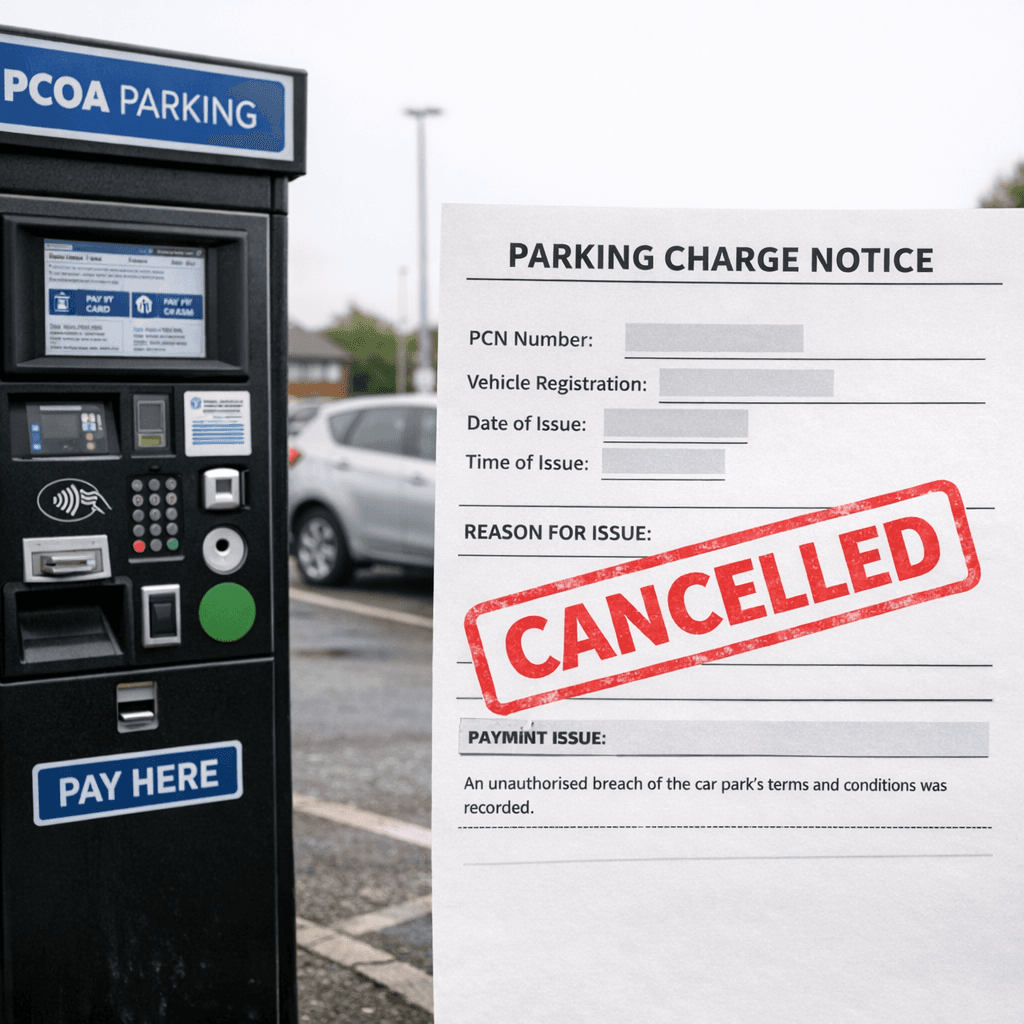
A motorist who received a parking charge notice from APCOA Parking successfully had the charge cancelled after raising concerns about the operator’s compliance with the Protection of Freedoms Act 2012 (POFA). This case demonstrates why it is always worth checking whether a private parking operator has followed the strict procedural requirements set out in the legislation — even when the operator insists those requirements do not apply.
The Parking Charge
The motorist received a parking charge notice (reference BZ00128208) from APCOA Parking (UK) Limited. Like many private parking charges, the notice demanded payment and warned of escalating consequences if the charge was not settled promptly.
Rather than paying immediately, the motorist decided to examine the notice carefully against the legal requirements that private parking operators must follow when pursuing the registered keeper of a vehicle.
The POFA 2012 Timeframe Argument
The Protection of Freedoms Act 2012, Schedule 4, sets out precise requirements that private parking operators must meet if they wish to hold the registered keeper of a vehicle liable for an unpaid parking charge. One of the most critical requirements is the timeframe within which the operator must serve a Notice to Keeper (NTK).
Under POFA 2012, if the operator does not know the identity of the driver, they must serve the NTK on the registered keeper within a specific statutory window. The notice must be served:
- Not before the end of 28 days beginning with the day on which the relevant event occurred (the “driving away” event)
- Before the end of 56 days beginning with that same day
If the operator serves the NTK outside this window — whether too early or too late — the keeper liability provisions do not apply. This means the operator cannot pursue the registered keeper for the charge and must instead identify and pursue the actual driver.
In this case, the motorist identified that the POFA timeframe requirements had not been properly met and submitted an appeal on that basis.
APCOA’s Response
What makes this case particularly instructive is APCOA’s response. The operator acknowledged receipt of the appeal and confirmed that the parking charge had been cancelled. However, APCOA also stated that they did not consider the POFA timeframe argument to be applicable to the circumstances.
Despite this claim, the charge was still cancelled. This is a pattern seen frequently in private parking appeals: operators cancel charges while simultaneously maintaining that the grounds of appeal were not valid. The practical outcome — cancellation of the charge — speaks for itself.
Why POFA Compliance Matters
The POFA 2012 keeper liability framework is one of the most powerful tools available to motorists challenging private parking charges. Here is why:
- Strict statutory requirements — The legislation imposes precise obligations on operators. A failure to comply with any of the requirements means keeper liability cannot be established.
- The burden is on the operator — It is for the parking operator to demonstrate that they have complied with every requirement of POFA Schedule 4. If they cannot prove compliance, the keeper is not liable.
- Timeframe compliance is frequently overlooked — Many operators issue notices close to or outside the statutory deadlines. A careful check of the dates on the NTK against the date of the alleged parking event often reveals non-compliance.
- Operators often concede rather than prove compliance — As this case demonstrates, operators may cancel charges when POFA compliance is challenged, even while claiming the argument does not apply. Proving compliance at a tribunal or court hearing requires evidence that many operators would rather not produce.
What to Check on Your Own Notice
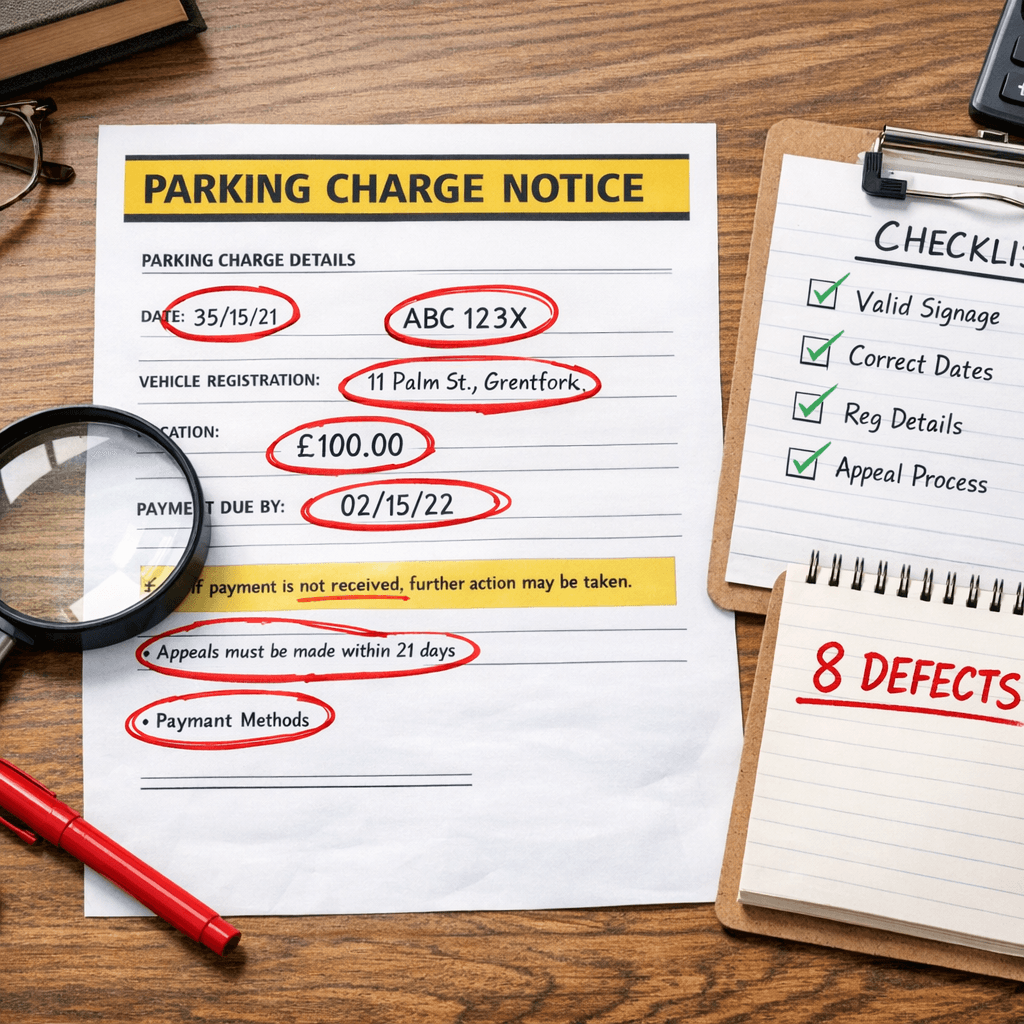
If you have received a parking charge notice from a private parking operator, here are the key POFA timeframe checks you should carry out:
- Date of the alleged event — When did the parking event (or “relevant event”) take place? This is your starting point for all calculations.
- Date of the Notice to Keeper — When was the NTK served? Check the date printed on the notice and consider when it was likely received.
- The 28-56 day window — Count the days. The NTK must not be served before day 29 and must be served by day 56. Any notice outside this window is non-compliant.
- Was a Notice to Driver issued first? — If the operator affixed a notice to the vehicle at the time of the event, different timescales may apply. Check whether this actually happened.
- Content requirements — Beyond timing, the NTK must also contain specific prescribed information. Missing or incorrect information can also invalidate the notice.
Key Takeaway
This case is a clear example of why motorists should never simply pay a private parking charge without first checking the operator’s compliance with POFA 2012. Even when an operator claims that a particular legal argument does not apply, raising it can still result in the charge being cancelled.
The Protection of Freedoms Act exists specifically to protect motorists from unfair enforcement by private parking operators. Understanding and asserting your rights under this legislation is one of the most effective ways to challenge a parking charge.
Upload your parking charge to Parking Mate AI and we’ll check it for free.