Parking Mate UK
Bus Lane PCN Appeal Won — Council Signage Obscured by Trees
A motorist won two bus lane PCN appeals against Barking and Dagenham and Newham councils by photographing signage obscured by trees. Learn how TMA 2004 and Bladon v Westminster support signage defences.
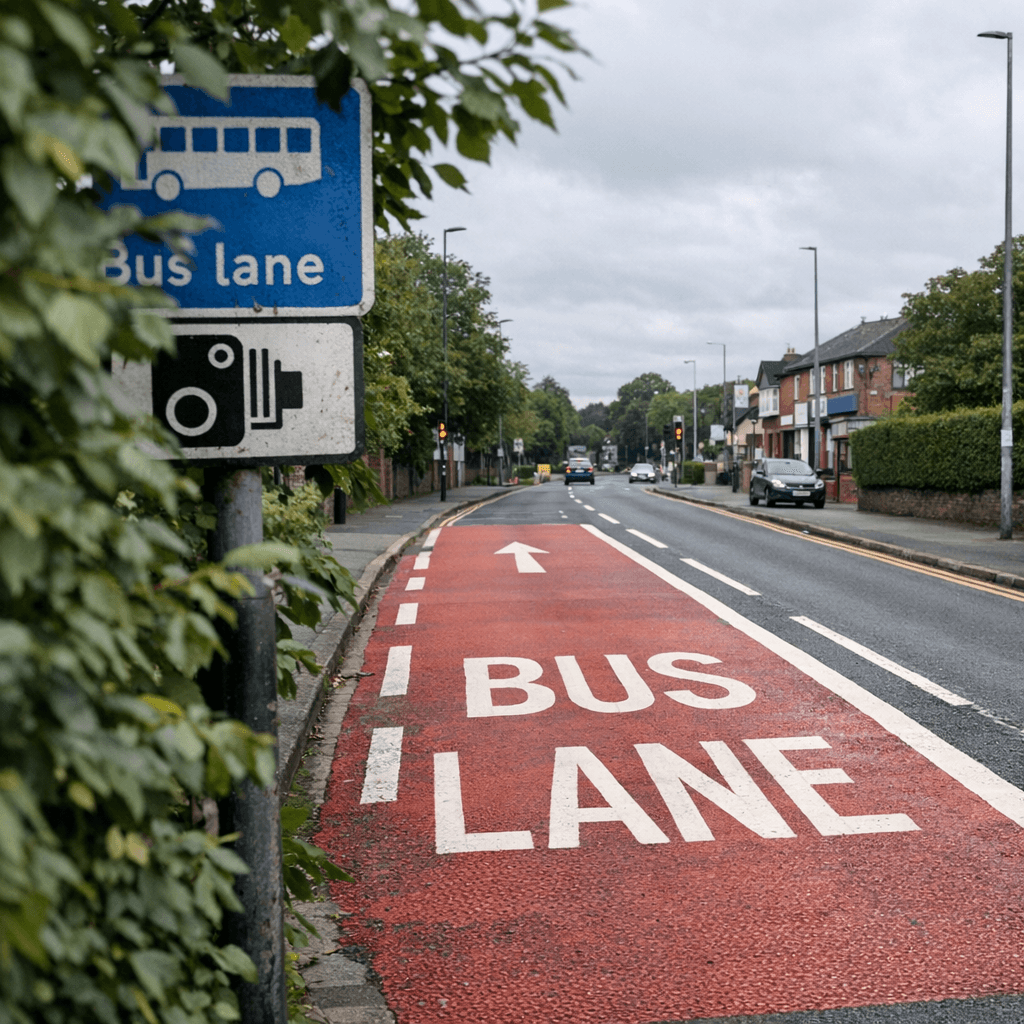
Bus lane penalties are among the most commonly issued council PCNs in London — and among the most commonly overturned on appeal. This case study examines how one motorist successfully challenged not one but two bus lane penalty charge notices by proving that the mandatory signage was obscured by overgrown trees.
The First PCN: Barking and Dagenham
A motorist received a penalty charge notice from the London Borough of Barking and Dagenham after a camera enforcement system recorded their vehicle driving in a bus lane on River Road, Barking. The penalty was set at £65 (reduced to £32.50 if paid within 14 days).
Rather than paying, the motorist visited the location to inspect the signage — and what they found formed the basis of a successful appeal.
The Evidence: Photographs Tell the Story
The motorist photographed the bus lane signage at the location and discovered that tree branches and foliage were partially obscuring the signs, making them difficult to read from a normal driving position. The photographs clearly showed:
- Tree branches hanging directly in front of the bus lane sign face
- Foliage blocking the operational hours and days information
- The sign was not visible at the distance required for a driver to react safely
These photographs became the foundation of the appeal, providing objective evidence that the council had failed to maintain adequate signage.
The Legal Arguments
The appeal was built on three complementary legal arguments, each supported by legislation and case law.
TMA 2004 Section 6.13 — Duty to Maintain Signs
The Traffic Management Act 2004, which governs civil enforcement of traffic contraventions in England, places a positive duty on local authorities to ensure that traffic signs and road markings are properly maintained and clearly visible. Section 6.13 of the Secretary of State’s Statutory Guidance states that civil enforcement officers (CEOs) have a duty to check and report defective signs.
The appeal argued that if the council’s own enforcement officers were not identifying and reporting obscured signage, the council was failing in its statutory duty — and it was unjust to penalise motorists for contraventions caused by that failure.
Bladon v Westminster — The Duty of Adequate Signage
The appeal cited the case of Bladon v Westminster City Council, which established that a local authority has a duty to provide adequate signage before enforcing traffic restrictions. If a motorist could not reasonably have been aware of a restriction due to inadequate signage, the penalty cannot stand.
The photographs provided clear evidence that the signage at River Road was not adequate — the operational hours were not readable, and the sign face was substantially obscured.
TSRGD 2016 — Traffic Sign Regulations
The Traffic Signs Regulations and General Directions 2016 (TSRGD) prescribe specific requirements for the size, placement, illumination, and visibility of traffic signs. The appeal argued that the obscured signs at River Road did not meet TSRGD requirements because they were not visible and legible to approaching drivers at the required distance.
The Result: PCN Cancelled
Faced with photographic evidence of obscured signage and well-cited legal arguments, the council cancelled the penalty charge notice. The motorist did not need to escalate to London Tribunals — the informal challenge was sufficient.
The Second PCN: Newham
Encouraged by the success of the first appeal, the same motorist applied identical arguments when they received a second bus lane PCN — this time from the London Borough of Newham. Once again, the motorist visited the location, photographed the signage, and found the same problem: tree branches and overgrown foliage obscuring the bus lane signs.
The appeal followed the same structure:
- Photographic evidence of obscured signage
- Reference to TMA 2004 and the council’s duty to maintain signs
- Citation of Bladon v Westminster
- Reference to TSRGD 2016 visibility requirements
The result was the same: the PCN was cancelled.
Why Signage Defences Work
Signage-based defences are among the strongest grounds for appealing a bus lane PCN because they go to the heart of the enforcement regime. The entire system of civil traffic enforcement is predicated on the assumption that restrictions are clearly communicated to road users through signs and road markings. When that communication fails, the enforcement fails with it.
Councils are aware of this, which is why signage challenges — when supported by photographic evidence — have a high success rate.
How to Build a Signage Defence
If you have received a bus lane PCN and believe the signage was inadequate, follow these steps:
- Visit the location as soon as possible. Signage can be trimmed or repaired after complaints, so photograph the current state before any changes are made.
- Take clear, dated photographs. Capture the sign from the driver’s perspective — from 50 metres, 30 metres, and at the sign itself. Include wide shots showing the obstruction and close-ups showing what information is hidden.
- Use Google Street View. Historical Street View images can show long-standing signage issues, strengthening your argument that the problem existed on the date of the contravention.
- Cite the legislation. Reference TMA 2004, TSRGD 2016, and Bladon v Westminster in your appeal. These are well-established authorities that adjudicators recognise.
- Be specific. Do not simply say “the sign was hard to see.” State exactly what was obscured (operational hours, bus lane symbol, days of operation) and explain why this prevented you from knowing about the restriction.
The Bigger Picture
Bus lane enforcement generates significant revenue for London boroughs. But that revenue must be collected fairly, and the law requires councils to maintain their signage to an adequate standard. When they fail to do so, motorists have every right to challenge the penalty — and as this case demonstrates, those challenges can succeed.
Upload your parking charge to Parking Mate AI and we’ll check it for free.